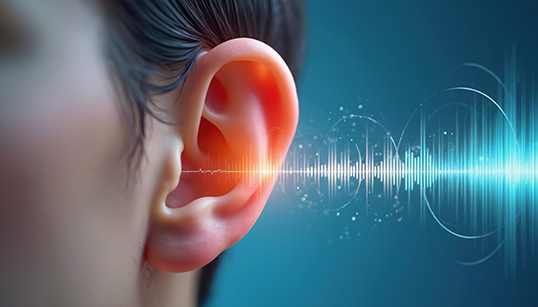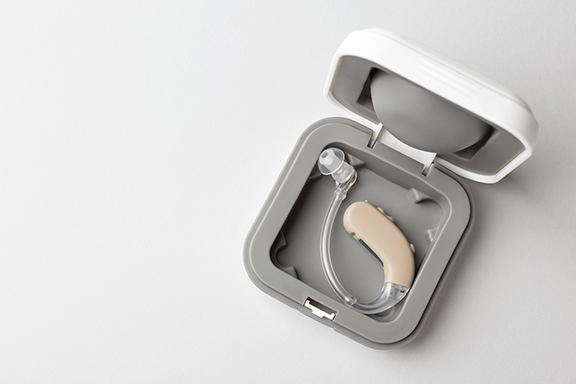
Discover how Bone Anchored Hearing Aids work, from the surgical process to experiencing sound. Read our blog for a comprehensive breakdown.

Bone anchored hearing aids (BAHA) are effective solutions for individuals with conductive hearing loss, mixed hearing loss, or single-sided deafness, using bone conduction technology to deliver sound directly to the cochlea.
What are bone anchored hearing aids?
BAHA systems are implantable hearing devices that consist of:
| Component | Function |
|---|---|
| Titanium implant | Surgically placed in the skull to anchor system |
| Abutment/Magnet | Connects implant to sound processor |
| Sound processor | Captures sound and sends vibrations through bone |
How does a BAHA work?
The BAHA sound processor picks up sound, transforms it into vibrations, and sends it through the skull bone conduction pathway to the inner ear. This approach bypasses damaged ear structures and delivers clearer, more direct sound.
What types of BAHA devices are available?
| Type | Description |
|---|---|
| Percutaneous BAHA | Abutment penetrates the skin |
| Transcutaneous BAHA | Uses internal and external magnets |
Device type depends on hearing profile, anatomy, and personal preference, determined during a hearing aid fitting.
What is the BAHA surgery process?
Hearing implant surgery is a quick outpatient procedure:
- A titanium post is implanted into the skull.
- Healing (osseointegration) takes 3–6 weeks.
- The external processor is attached after recovery.
What care is needed after surgery?
BAHA post-surgery care includes:
| Task | Purpose |
|---|---|
| Site cleaning | Prevents irritation or infection |
| Regular adjustments | Ensures proper sound levels |
| Audiologist follow-up | Supports long-term performance |
Who is a candidate for BAHA?
You may be a good candidate for a Bone Anchored Hearing Aid (BAHA) if you have:
- Conductive hearing loss: Sound can’t pass through the outer or middle ear.
- Mixed hearing loss: A mix of conductive and inner ear (sensorineural) loss.
- Single-sided deafness (SSD): No hearing in one ear, normal hearing in the other.
- Chronic ear infections: Infections that make regular hearing aids hard to use.
- Ear shape problems: Such as closed or missing ear canals.
- Poor results with normal hearing aids: When they don’t help or fit well.
What are the benefits of BAHA?
Bone Anchored Hearing Aids (BAHA) offer clear advantages for specific hearing conditions:
- Clearer speech in noise: Improves speech understanding in loud environments.
- Bypasses damaged ear parts: Delivers sound directly to the inner ear via bone conduction.
- Consistent sound: Fixed implant offers stable performance.
- Comfortable for sensitive ears: No need for in-ear devices.
- Better sound direction: Helps locate where sounds come from, especially for SSD.
- Open ear canal: Avoids the “plugged ear” feeling.
- Long-lasting: Durable with minimal daily upkeep.
How long does a BAHA last?
With good care, the bone anchored hearing system can last over 10 years.
The sound processor may require replacement every 5–7 years.
| Factor | Impact |
|---|---|
| Cleaning | Prevents site issues |
| Device care | Extends functional life |
| Regular checkups | Maintains performance |
What are the risks and feedback?
Most users tolerate the device well, but minor issues can occur:
| Risk | Example |
|---|---|
| Skin irritation | Redness or soreness around implant site |
| Infection | Preventable with proper hygiene |
| Device issues | Addressed with BAHA troubleshooting |
Clinical data and BAHA device reviews consistently highlight sound quality, reliability, and overall satisfaction.