Curious about smartphone-based hearing tests? Discover if smartphone-based hearing tests: are they reliable in our latest blog post and find the answers you need!
Hearing loss is sometimes called an “invisible disability.” It is something that many people in the world have. Now, with new mobile health tools, you can use your phone to do hearing screening. These apps are changing how people check their hearing. They let people find out their hearing thresholds in new ways. This helps more people get care for their hearing.
People want to know if these smartphone hearing tests are as good as regular ones. People ask if these apps really find sensorineural hearing loss. They want to know if the apps help pick up problems early, so they get help faster. In this blog, we talk about the changes in hearing tests. We also look at how well these apps work and how they look for hearing loss. There is more in this blog about what the future might be for these tools. Let’s see what these apps can do for us now.
Overview of Smartphone-Based Hearing Tests
Smartphone-based hearing tests bring new technology and healthcare together. These tests help find hearing loss fast in people with normal hearing. They use smart programs and mobile audiometry on your phone to check hearing thresholds and look for hearing impairment. These tests do not cost much and can be used anywhere. So, they are a good choice for people in areas where there are not many hearing doctors.
Some popular smartphone apps, like Digit-in-Noise Test and HearTest, show that their sensitivity and specificity values can be anywhere from 75% to 100%. These apps play simple tones at many sound levels. They work in a way that is a lot like the hearing tests you get from a doctor. But some people are still not sure about the diagnostic accuracy of these tests. There are worries that background noise or other things can get in the way. People want to know if these apps can really match how good the usual hearing tests with machines are. Now, we will talk about the technology behind these apps, how to use the tests, and what you should look out for. This way, you can see how well these mobile platforms work.
What is a smartphone hearing test?
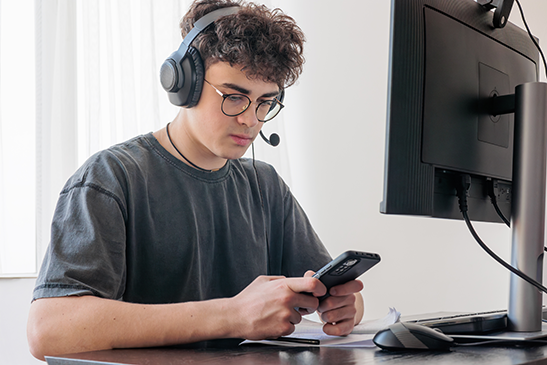
A smartphone hearing test is a digital tool that assesses hearing ability using a mobile device and headphones. Most tests operate through hearing test apps available on iOS or Android, guiding users through tones, speech recognition, or noise-based assessments.
These tests typically fall into three categories:
| Test Type | Description | Examples |
|---|---|---|
| Pure-tone audiometry | Plays tones at varying frequencies and volumes | Mimi, hearWHO |
| Speech-in-noise | Tests speech recognition in background noise | uHear, Hearing Test Pro |
| Self-assessment tools | Uses questionnaires to identify perceived hearing issues | Hearing Check, Hearing Handicap Tool |
These tools support self hearing tests, allowing users to monitor their ear health anytime, anywhere.
Who should use mobile hearing tests?
Mobile hearing tests benefit users seeking quick, convenient screenings, particularly those who:
- Live in remote areas with limited audiology services
- Need regular hearing checks due to existing conditions
- Want to monitor age-related hearing changes
- Use hearing aids and need basic calibration
They’re also useful for mobile hearing care providers offering teleaudiology solutions through hearing assessment apps.
Technical Foundations of Smartphone Audiometry
Smartphone audiometry uses new technology to perform the same job as traditional testing methods. The apps play pure tones in different pitches on your phone, recording what you hear and using data analysis to determine your hearing thresholds. These tests, including the results of smartphone audiometry, are similar to professional tests but are more accessible at home. However, they have limitations, such as not being as accurate in quiet environments with minimal ambient noise and not being compatible with different phones and headphones. Tools that help improve diagnostic accuracy and close gaps in the technology are essential for obtaining accurate results. Understanding these tools can help improve the overall effectiveness of smartphone audiometry.
Key Technologies Enabling Mobile Hearing Tests
Mobile hearing tests use both hardware and software to test your hearing. You can do it right on your smartphone. Here is a quick look at the main things that let this happen:
- Smartphone Microphones and Speakers
These are used to play sounds and to record what you hear during the hearing test. - Headphones
These headphones send clear and stable sounds straight to your ears. - Hearing Test Apps
These apps guide you step by step through the tests. They also check and analyze your answers right away. - Digital Signal Processing (DSP)
DSP helps cut out background noise and makes the sound better for you. - Artificial Intelligence (AI)
AI changes the test based on your answers and helps find patterns in your hearing. - Cloud Storage
Cloud storage keeps your hearing test results safe. It is easy to look at your progress over time. - Bluetooth & Wireless Connections
You can link the test to wireless headphones or hearing aids. This lets you take the test in more ways. - Noise Detection
It will let you know if there is too much background noise. This can make sure your results are correct.
Accuracy Factors in Smartphone Hearing Assessments
Diagnostic accuracy in smartphone-based audiometry can vary depending on the location and equipment used. The use of a soundproof booth provides the best results, but in real-life situations, ambient noise and hardware issues can affect the results. This is particularly problematic for school children and older patients. Additionally, the differences in headphones’ function can make it difficult to obtain consistent results. Corona AP has also shown that people may answer tests differently, necessitating strict calibration methods.
Despite these challenges, apps like uHear and HearTest demonstrate the validity of hearing by offering sensitivity and specificity values as high as 98%, similar to those of clinic-based tests and free field hearing tests. This shows growing trust in mobile audiometry, but more work is needed to ensure accurate results for all age groups and backgrounds.
Smartphone vs. Traditional: What’s the difference?
When you try to check hearing, you can use the smartphone-based hearing tests or the traditional methods. Both test how well people hear. But there are some big differences between them.
| Feature | Smartphone-Based Test | Traditional Audiometry |
|---|---|---|
| Accuracy | Moderate | High (clinical-grade) |
| Cost | Often free or low-cost | Typically higher, insurance may apply |
| Environment | Uncontrolled | Soundproofed booths |
| Professional supervision | Absent | Performed by licensed audiologists |
| Use case | Screening and monitoring | Diagnosis and treatment planning |
Smartphone tests are useful for initial screening, but professional evaluation remains the gold standard for diagnosis and treatment.
Methodologies Compared
The main difference between mobile audiometry and standard pure-tone audiometry is how they use mobile devices. A standard pure-tone hearing test uses many calibrated machines and needs soundproof rooms. That is why it has high diagnostic accuracy. A smartphone hearing test, though, copies these steps but uses apps on mobile devices and headphones instead. Because of this, more people can get a hearing test easily. It is also much cheaper than the traditional way.
Some apps, like HearTest and Hearing Test, give a hearing test that can be just as accurate as the pure-tone hearing test at different dB HL levels. Previous research finds that their sensitivity rates range from 75% to 98%. This means they can be good for a hearing test, even if there are a few limits.
But, mobile systems can not always make it easy to know the clear difference between conductive and sensorineural hearing loss. The gold standard pure-tone test is still the best way for this. Still, a hearing test app does bring extra benefits. These apps work well for big screening programs. This is helpful in places that do not have enough resources.
Effectiveness in Hearing Level Determination
Smartphone tests like HearScreen are used for a hearing loss screening test. They measure hearing thresholds in people. These tests help to find problems like unilateral sudden sensorineural hearing loss. The apps use accurate signals to show how bad the hearing loss is. Studies say that the threshold difference is less than 5 dB when you compare this test to devices found in a clinic.
These tests are good to use for hearing screening and help find hearing loss. Still, using the old way of checking with pure sounds, the reference test, is better when you need to know the physical reasons behind different ear problems. The Index test is a hearing screening test on your smartphone. It’s easy to take with you and simple to use. But, you get the best results and feel more sure about what you find when you use it in a quiet place.
Mobile tests help school children and older patients who may have hearing loss. These tests also work well for other age groups. But, to get more people to use them, we need to fix issues with testing for hearing loss in all age groups and in places that may have a lot of noise.
Case Studies: Success Stories of Mobile Hearing Tests
Mobile hearing tests are effective for various individuals, including school children and older patients. Smartphones can help detect hearing loss early, allowing for immediate support and better detection. Additionally, hearing aid use enables remote audiometry, which is convenient for older patients, allowing them to receive their hearing checked without the need for face-to-face visits. The World Health Organization emphasizes the importance of mobile health in dealing with hearing impairment, making these tools a suitable alternative to conventional audiometry. Feedback from users indicates that they now know more about their hearing health and that the tests improve their quality of life.
User Experiences and Feedback
Patient stories about smartphone-based hearing tests show many different ideas about how they work for people in real life. A lot of people like that these tests are easy to use. The tests let everyone do the screening of hearing loss at home. This helps them save time and makes things easier for their everyday life.
Some people are concerned about accuracy. They say the tests might not work well if there is a lot of noise around. This makes it hard to tell if someone really has hearing loss.
Some people say these tools are easy to use. Others talk about problems with sensitivity and specificity values. All these stories from users show that mobile health is good for people who have hearing loss. But it is not perfect yet. There is still room to make it better for all in the future.
Challenges and Limitations
What are the limitations of smartphone hearing tests?
Despite their convenience, smartphone hearing tests have limitations that impact reliability:
- Lack of standardization: Devices and headphones vary widely
- Uncontrolled environments: Ambient noise affects results
- No professional oversight: Errors in self-administration go unchecked
- Not suitable for diagnosis: Cannot determine exact type or cause of hearing loss
These limitations make mobile tests best suited for preliminary screening, not medical-grade assessments.
Environmental Variables and Their Impact
Ambient noise levels can change how well smartphone hearing tests do their job. Things in the area, like background noise or how the sound travels in the room, can affect what the test shows. This can make it hard to get right results when checking for hearing loss, and it may mean that the results are not correct. Some studies say that if you do not control the area around you, there is a risk of bias that can lower how good mobile health tools work for hearing loss tests. So, knowing how things from the outside can change test outcomes helps us do better when we check how these tests work. This also helps us find the right way to use new tools while keeping good and steady testing standards alive when using mobile health for hearing loss screening in places that have ambient noise.
Hardware Limitations in Smartphones
Smartphones come with some hardware limits that can affect how well they work for hearing tests. The microphones and speakers in these devices are designed for talking, not for tasks like pure tone audiometry. They may not catch the full frequency range or good enough sound for these tests. A lot of ambient noise can also make the results wrong. It is hard to reach good diagnostic accuracy without a soundproof room. The prevalence of hearing loss is not the same for every age group, so making new hardware to give clear results can be tricky.
Regulatory and Safety Considerations
Making sure that mobile hearing tests follow health rules is very important. The world health organization says that the technology used in hearing screening needs to have good diagnostic accuracy. This helps keep people who use it safe. It is also important for rules to check how data is handled, because health information can be private. Keeping this information safe matters a lot.
As mobile health tools change and get better, it is a good idea to look at the rules and safety tips closely. Doing this makes people feel that they can trust the use of smartphones for hearing tests. It helps make a world where more people feel okay about checking for hearing loss early. In the end, this can help make life better for many of us.
Compliance with Health Regulations
Making sure that mobile health hearing tests follow health rules is very important. Mobile health apps and phone tests for hearing loss need to follow the rules set by groups like the World Health Organization. With hearing loss now seen in people from many age groups, this becomes even more important. There should be good data analysis in place to check how these tools work. It is also key to test for diagnostic accuracy and make sure the results are right.
Groups that set the rules check things like sample size, risk of bias, and if the hearing tests work well for all people. They use these checks to make sure the tests can be trusted when used to find hearing loss. The rules also look at a person’s age and where the test happens, because those things can change what you get. That is why it is so important to follow the rules from the World Health Organization when making new mobile health tools for hearing loss. This is true for the research too, even the ones that people look at through platforms like Google Scholar.
Privacy Concerns in Data Handling
There are big worries about how personal data is used in smartphone-based hearing tests. As more people use mobile health tools, it is very important to keep this data safe. Many people may not know they are giving away health data, and this can make privacy and safety problems worse. The way data is taken needs to be clear, and companies should follow health rules to keep the risks low. People in the academic world talk a lot about building trust by having strong privacy rules. This helps users feel safe and also helps mobile health hearing tests work better for everyone.
Future Prospects in Mobile Audiometry
Innovations in mobile audiometry, as noted in studies by Swanepoel DW, are set to change the way people do hearing screening. The aim of this study is to show how new tools use artificial intelligence to make diagnostic accuracy better when using a smartphone. With this, people can get good and reliable results in many places and at any time. There is real-time data analysis, and new apps help make hearing checks feel more personal. This is done by following rules set by J Am Acad Audiol. These changes can help people in all age groups and may lower the prevalence of hearing loss.
As mobile health grows, more studies will try to make these tests work better by following the preferred reporting items for systematic reviews, including a process evaluation study. The included studies will see if these tools line up with the gold standard used in conventional audiometry. The main aim is to help people who have hearing impairment so they can have a better quality of life.
Innovations on The Horizon
As mobile health grows, it is changing the way we do hearing tests. There are new ways for people to check their hearing thresholds right on their smartphone. These tools use machine learning to help with early detection of hearing loss in people of all age groups. Some new apps even use something called augmented reality, so your test feels less like old-fashioned conventional audiometry and more exciting. These updates tackle the prevalence of hearing loss and help make sure that everyone gets the hearing checks they need, no matter who they are.
Integrating AI for Enhanced Accuracy
Advanced algorithms that use artificial intelligence (AI) are changing how we do hearing tests on smartphones. These tools help to improve diagnostic accuracy. They also make it easy to find different types of hearing loss, like sensorineural and conductive hearing loss. AI can adjust to things around us, such as background noise. This helps to make specificity values better and gives us more reliable results.
Using AI in these tests gives a better way to check hearing thresholds. It helps all age groups to find problems early. With early detection, people can get better care for hearing loss and other hearing issues. This can help people feel good and make the quality of life better for them. These advances are good for the world’s population.
Expert Opinions
Audiologists say there is still a lot to learn about how good smartphone-based hearing tests are. Some people like how easy it is to get these mobile health tools. They think this can help many people. But there, others feel people should also worry about the need for good diagnostic test accuracy. The accuracy of smartphone audiometry is an important topic for them. A lot of them talk about the limits when you do hearing tests outside soundproof rooms. Even the experts who make this new technology say the same. They say we need things that can improve sensitivity and specificity values. This shows people need to find the right balance. There should be an easy way to use mobile health apps, but the clear results from methods used in the gold standard of conventional audiometry, such as the Web of Science, must be there too.
Insights from Audiologists
Insights from audiologists say it is now important to add smartphone-based hearing tests in clinics. People talk more about these mobile health tools because they are easy to use. But experts want to make sure these tests match up with conventional audiometry, especially when it comes to the ear canal and external auditory canal. Audiologists want new ways to find hearing loss better. They also want to check things like ambient noise and understand that every person has a unique hearing profile.
Studies from journals like Int J Audiol show that specificity values for hearing tests can be very different in age groups. This tells us that age and these group differences need to be remembered. All these new ideas help us know more about how things like phones can help with early detection of hearing loss. These tools can let more people have testing and find help faster.
Technological Perspectives by Developers
Mobile health, including j e health technologies, is changing the way people check for hearing loss. The people who create these tools say it is important to have strong systems for good diagnostic accuracy. With this, smartphone apps can give results that are much like conventional audiometry, and these are close to what is found in J Laryngol Otol and Ann Otol Rhinol Laryngol reports.
Better sensors let people find hearing impairment across a bigger frequency range. So, people from all age groups can get help much earlier. When makers use new things like real-time data analysis and machine learning, the screening of hearing loss gets more exact and trusted. All of this helps make the quality of life better for the world’s population, especially considering the impact of hearing loss for those who have untreated hearing loss.
How accurate are app-based hearing tests?
App-based hearing tests are moderately accurate for hearing screening but not diagnostic.
Accuracy depends on multiple factors:
| Variable | Impact on Accuracy |
|---|---|
| Headphone calibration | Poor calibration leads to false thresholds |
| Environmental noise | Background noise can skew results |
| App validation | Clinically validated apps perform better |
| Device compatibility | Hardware inconsistencies affect output |
Clinically reviewed apps like hearWHO and Mimi Hearing Test report accuracy rates between 70% and 90% for detecting moderate hearing loss. However, they are not replacements for professional audiometric evaluations.
Can mobile hearing tests be used for all age groups?
Yes, a mobile hearing test can help people in many age groups. This is true for children and also for older adults. But you have to think about what each person can do. Some people may find it hard to focus. Others may not feel sure about using new tools or technology. If you keep all of this in mind, you can make the results better for everyone. You can also make the mobile hearing test a good way for people to check their hearing.
Are there any risks involved in using smartphone-based audiometry?
Smartphone-based audiometry is easy for people to use. But, there are some risks you need to know about. The results may not always be right. This can be because of noise around you or what the phone can and cannot do. People who use these apps may not have enough training on how to do the tests. Because of this, the tests might give wrong answers. You could then get the wrong advice or treatment for your hearing. To be sure about your hearing, it is always best to talk to a professional.
How often should I test my hearing using a smartphone app?
It is good to go in for a hearing test often. You should try to have it done at least once every six months or every year. The time gap you need will depend on your age and any hearing problems that you have. Regular check-ups help you and your doctor know about any changes in your hearing as time passes. This way, you can get the help you need, feel sure of your results, and trust even the results you get from smartphone-based hearing tests.
What should I do if my smartphone hearing test suggests hearing loss?
If your hearing test on your smartphone shows you may have hearing loss, you should see an audiologist. The audiologist will look at your hearing in detail. They will say if your hearing loss is true or not. The audiologist may tell you to try hearing aids or to take more tests. This will help you get the right care that fits you.