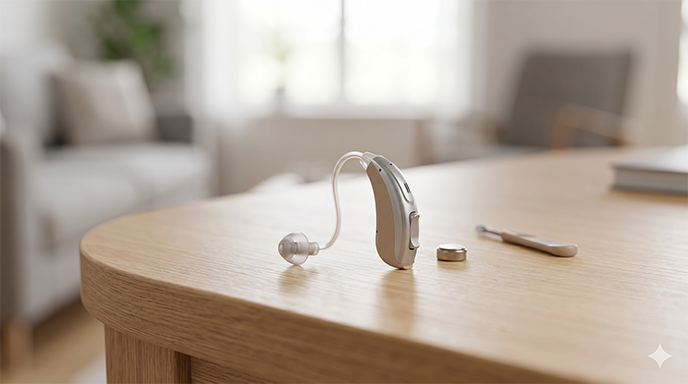
Learn how to read your audiogram to understand your hearing results better. Discover the next steps to take for improved hearing health on our blog.

When you notice there is a change in your hearing that gets in the way of your daily life, it may help to learn about an audiogram. This is a chart you get from a hearing test. The chart shows the hearing thresholds for you, which means it shows how well you can hear. A hearing test can show if there is hearing loss. You will be able to see if it is mild, or if the hearing loss is stronger, like moderate or more serious. The audiogram can also show if the hearing loss is in the middle ear, inner ear, or some other area. By looking at this chart, you can find what is causing the hearing problem, and then use new ways to manage it.
What is an audiogram?
An audiogram is a chart that shows the quietest sounds someone can hear at different sound pitches. It helps doctors see the hearing thresholds for each ear. People use it to check for hearing loss. This way, audiologists find out the type and how bad the hearing problem is.
How does an audiogram work?
An audiogram is a picture that shows the results from a hearing test. This test is done with a tool called an audiometer. The machine plays sounds at different pitches, measured in Hz. It also changes the loudness, which is measured in dB HL. You tell the person testing you when you hear the sounds. The quietest sounds you can hear are called your hearing thresholds.
The audiogram shows two lines:
- Red O’s and < or [ symbols are used for the right ear
- Blue X’s and > or ] symbols are meant for the left ear
These marks show how you respond to air and bone conduction tests.
Key Components of an Audiogram
An audiogram has a few main sections that show how you hear sounds. This chart helps you and your doctor or hearing expert see how good your hearing is.
- Frequency (Hz) – This shows the pitch of the sound. You can see it on the horizontal line. It runs from low to high, usually from 250 Hz to 8000 Hz.
- Decibel Level (dB HL) – This tells how loud the sound is. It is shown on the vertical line. Small numbers are at the top, which means the sound is not very loud.
- Right Ear Symbols – For the right ear, you will see red circles for air conduction. A < or [ stands for bone conduction.
- Left Ear Symbols – For the left ear, you will see blue crosses for air conduction. A > or ] marks bone conduction.
- Air Conduction Line – This line shows how a person hears by sending the sound through their outer ear, middle ear, and inner ear.
- Bone Conduction Line – This line tests how good the inner ear is at hearing. It does not use the outer ear or the middle ear.
- Masking Symbols – Special marks are used when noise is given to only one ear. This helps keep sound out of their other ear.
- Speech Audiometry Results – You will find these results apart from the other marks. They show how well people understand speech and the softest speech they can hear.
How is hearing loss shown on an Audiogram?
Hearing loss happens when the threshold lines are lower than the 0–25 dB HL range. This means it can be harder for people to hear some sounds.
The shape of the line helps determine the type:
| Pattern | Description |
| Sloping | High frequencies worse than low ones |
| Flat | Equal loss across frequencies |
| Cookie-bite | Worse hearing in the mid-frequencies |
| Noise-notch | Loss around 3000-6000 Hz from noise exposure |
Sudden drops or flat lines show different kinds of hearing problems.
What does normal hearing look like on an Audiogram?
Normal hearing means that you are able to hear both low and high sounds, even when they are quiet. On an audiogram, normal hearing will show lines that stay within a certain area for each key sound. This shows that your ears can pick up a normal hearing range of frequencies.
Here is a table that shows what normal hearing can look like on an audiogram.
| Frequency (Hz) | Decibel Level (dB HL) | Interpretation |
|---|---|---|
| 250 Hz | 0 to 25 dB | Normal hearing |
| 500 Hz | 0 to 25 dB | Normal hearing |
| 1000 Hz | 0 to 25 dB | Normal hearing |
| 2000 Hz | 0 to 25 dB | Normal hearing |
| 4000 Hz | 0 to 25 dB | Normal hearing |
| 8000 Hz | 0 to 25 dB | Normal hearing |
Note:
- A person has normal hearing when their hearing levels are from 0 to 25 dB HL for all sounds tested.
- The test puts symbols on an audiogram chart. A circle stands for the right ear, and a cross shows the left ear. These marks help everyone see if you have normal hearing.
Preparing for Your Audiogram Test
Getting ready for the audiogram test does not have to be hard. There are a few things you can do first that will help. You should stay away from loud sounds at least one day before your test. Any noise exposure in that time could change your results. Make sure you clean your outer ear before the test as well. This can help remove earwax, so the sound will reach your tympanic membrane better.
When you get ready for your visit, talk with your audiologist about any signs or health problems you have. Make sure to let them know if you have a middle ear infection or what medicines you take. This will help the audiologist check your hearing thresholds in the best way.
Who Should Consider Getting an Audiogram?
An audiogram can help people of any age find out if their hearing has changed. It shows if you have hearing loss, even if it is mild or moderate hearing loss. There are many reasons for hearing loss. Some people lose hearing as they get older, a problem called presbycusis. It becomes hard for them to hear high frequencies. Many young people can also get hearing loss. This can be from noise exposure at work, at school, or simply from being around loud sounds. A lot of noise can also make it hard to understand what people say. People who work on construction sites, musicians, and soldiers often get exposed to loud sounds, so they are more likely to have hearing loss.
Regular checks at work or school can help catch hearing problems early. When we find them early, we can take steps to keep our hearing good as we get older. This helps all of us to protect our hearing for the coming years.
Steps to Take Before Your Audiogram Appointment
Getting ready is very important for your hearing test. Doing this will help you get the most correct results. To get the best results, follow these hearing test steps.
- Stay away from places with loud sounds for a whole day. This can help you not get changes in how you hear, even if they do not last long.
- Make sure you do not have earwax in your outer ear. This will help sounds go to your tympanic membrane the right way.
- Tell your doctor about any medicine you take or if you have health problems, such as trouble with your middle ear.
Before you go for audiometric testing, check that the headphones fit your ears well. If they feel loose, or if you can hear noise from outside, your results might not be right. Bring a note with you that lists your symptoms or any changes in your hearing. This will help the audiologist know what to pay attention to that matters to you the most.
Keep in mind that to get good results with the audiogram, you should be calm and pay attention. When you feel relaxed and stay focused, you can give better answers. This will help when they play the test sounds. That way, your results will be right.
Interpreting Your Audiogram Results
After you finish your hearing test, it can be easy to read your audiogram if you have the right help. The numbers in this chart show the sound intensity and your hearing thresholds. The lines on the audiogram say how well you hear many frequencies.
When you look at your audiogram, watch for anything that does not look normal. If you see lines that drop or strange curves, it can show that your hearing has changed. These shapes may mean you have had noise exposure or there may be a problem in your inner ear. The audiologist will talk to you about what type of hearing loss you have and how bad it is. They will also give you the best ways to help, based on what they see.
What do the numbers on an Audiogram mean?
The numbers on the side of an audiogram show you how strong a sound is. People call this sound intensity. We measure this in decibels, or dB. Sounds at the top, close to -10 dB, are very quiet. A whisper is one example. Near the bottom of the chart, sounds can be as loud as 120 dB. This is about as loud as a jackhammer.
The numbers on the audiogram from left to right show how low or high the sound pitch is. This is called frequency. On the left side, you will see thunder. It is a low-frequency sound. On the right side, there are crickets. They make a high-pitched sound. When you look at both sides of the chart together, you can see what sounds you can hear and what sounds you cannot.
These numbers show doctors if you have hearing loss. If you need sounds to be louder than 90 dB to hear them, that is called profound hearing loss. If you hear sounds which are between 40 and 70 dB, then you have moderate hearing loss. This helps people understand how they hear different kinds of sounds, and if they notice any type of hearing loss.
What do the lines on an Audiogram represent?
Audiogram lines show your own hearing thresholds for many sounds. Air conduction lines let you see how sound moves through the middle ear and tympanic membrane. Then, it goes on to the inner ear.
Bone conduction checks how the inner ear is working. It is a good way to find out about hearing loss. There are a few ways to test both bone conduction and air conduction in your ears. The test results show lines that make patterns on a chart. These patterns help you, and people like your doctor, know how well you can hear. If the lines from bone conduction and air conduction do not match, this can show there is conductive hearing loss or sensorineural hearing loss.
These lines can also help spot some hearing conditions. For example, when the high frequencies start to get worse, it can be a sign of hearing loss that happens as you get older. If the lines have odd patterns, this might come from damage by being around loud sounds. This way, you can see your entire frequency range. It gives you a better and fuller idea of what is going on with your hearing.
What are decibel levels on an Audiogram?
An audiogram is a test that checks how well you can hear. It shows your hearing sensitivity in decibels hearing level (dB HL). This tells you how loud a sound has to be for you to hear it. If the number gets higher, it means there is more hearing loss. Here is a simple guide to what these numbers mean for day-to-day hearing.
| Hearing Level | dB HL Range |
| Normal | 0 – 25 dB |
| Mild Hearing Loss | 26 – 40 dB |
| Moderate Hearing Loss | 41 – 70 dB |
| Severe Hearing Loss | 71 – 90 dB |
| Profound Hearing Loss | 91+ dB |
These levels can change the way people talk to others each day. You may need hearing aids or some kind of treatment for this.
What are Audiogram patterns?
Audiogram patterns show the way you hear different sounds, from soft to loud. These patterns help the audiologist find out the type of hearing loss you have and how bad it is. The most common audiogram patterns are sloping, flat, cookie-bite, and noise-notch. Each one tells the audiologist something special about why you have hearing loss. This helps them choose the best way to treat your type of hearing loss.
What is a sloping Audiogram?
A sloping audiogram shows that hearing gets worse as the sounds go from low to high frequencies. People with this type of hearing loss can hear low sounds better than they hear high ones. This usually happens because of getting older or from noise exposure. It can be hard for them to talk with people or do daily things because of this type of hearing loss.
What is a flat Audiogram?
A flat audiogram means the level of hearing is about the same for every sound, no matter if it is high or low. This can show that a person has hearing loss for all sounds and pitches, not just some. It is good to know about this, so you can make the right plan for treatment.
What is a cookie-bite Audiogram?
A cookie-bite audiogram has a shape that stands out. It looks like the graph has a “bite” in the middle. This shape is clear and easy to spot. It shows a type of hearing loss. People with this pattern often have trouble hearing the sounds used when we talk. But they can still hear lower and higher frequencies. This pattern helps doctors know which type of hearing loss someone has.
What is a noise-notch Audiogram?
A noise-notch audiogram shows when you begin to lose the ability to hear some types of sounds. Most often, this happens because of loud sounds. sensorineural hearing loss is a kind of hearing loss you can usually notice on one of these tests. That is why it is so important to protect your ears and not stay around loud sounds for a long time.
Types of Hearing Loss Identified by Audiograms
Audiograms help people see and understand hearing loss. They show the different types of hearing loss a person might have. This is done by checking how sound goes through the ear.
Here are the main types identified:
- Conductive Hearing Loss – This type of hearing loss happens when something in the outer ear or middle ear keeps sound from getting to the inner ear.
- Sensorineural Hearing Loss – This kind of hearing loss is from damage in the inner ear or the nerve for hearing.
- Mixed Hearing Loss – A person has both conductive hearing loss and sensorineural hearing loss at the same time with this type of hearing loss.
- Unilateral Hearing Loss – In this, the hearing loss is only in one ear.
- Bilateral Hearing Loss – This means there is hearing loss in both ears.
- Symmetrical Hearing Loss – Here, both ears have the same level of hearing loss.
- Asymmetrical Hearing Loss – This is when each ear has a different level of hearing.
Sensorineural vs Conductive Hearing Loss
Knowing the difference between sensorineural hearing loss and conductive hearing loss is important when you look at your audiogram. Sensorineural hearing loss happens when something is wrong in the inner ear or with the auditory nerve. This type of hearing loss can make it hard to hear the highest sounds. A lot of people with this may not pick up all parts of human speech.
Conductive hearing loss is different. It happens in the outer or middle ear. This can be because of fluid in the ear or a problem like tympanic membrane perforation. People with conductive hearing loss can often get help using hearing aids or with a surgical intervention.
What changes in hearing come with age?
Age-related hearing loss, called presbycusis, starts to affect high frequencies before anything else. On the audiogram, you will often see this as a sloping line that goes down. This kind of hearing loss makes it hard for people to understand what others say, especially when there is a lot of noise in the place.
Common signs include:
- Asking people to say things again
- Turning up the TV or phone sound
- Finding it hard to hear when talking in a group
Finding ear problems early with audiograms can help you start using hearing aids or get therapy. This way, you can manage the changes and feel better. Hearing aids may make life easier for them if these changes are found in time.
How Often Should I Get an Audiogram?
To keep your hearing in good shape, it is a good idea to get an audiogram every two years. If you feel there are changes with your hearing, you should get one every year. Doing these tests often will let you and the doctor know if your hearing gets worse. This way, you can get help right away.
Can Audiograms Detect All Hearing Issues?
Audiograms are helpful for checking many hearing issues. But they do not always show every problem. A normal hearing test might not find things like auditory processing trouble or some health conditions. To know what is really happening, you may need more tests. It is good to visit a healthcare professional for a full check-up.
What Should I Do If My Audiogram Shows Hearing Loss?
If you see from your audiogram that you have hearing loss, you should go to an audiologist for a full checkup. The audiologist will tell you if you need hearing aids, other tools, or a different type of help. They will pick what will work best for you and your needs. Getting help early can help you talk with people more easily and make your life feel better.