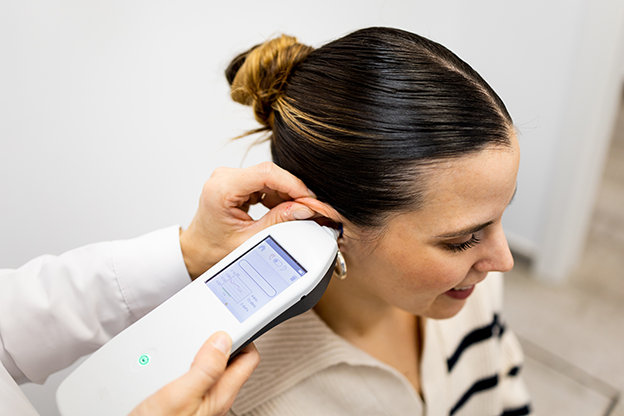
Discover what Is an Auditory Brainstem Response (ABR) Test? Learn its significance, who requires it, and what to expect during the procedure on our blog.
When you hear a sound, it travels through the auditory system and reaches the brain stem. The auditory brainstem response (ABR) test checks how well this path works. The ABR test gives you a way to see if sounds move as they should through the auditory nerve and the brain stem. Many doctors use this test in hearing tests for both newborns and adults. It can help find issues with hearing, and it can also be used when looking into other brain problems. Using the ABR test is important for looking after your hearing and keeping your auditory brainstem healthy.
What Is an Auditory Brainstem Response (ABR) Test?
An auditory brainstem response test is used to see how sound moves from your ear to your brainstem. This test checks the way your auditory nerve and the pathways work. It is used for people who cannot do regular hearing tests, like infants or those with developmental delays. The ABR test helps doctors know how well the auditory brainstem is working.
Basic concept of ABR testing
The abr test works by using something called evoked potential. When a sound goes into the ear, the brain makes small electrical signals. These signals travel to the brain along the auditory nerve. The surface electrodes are put on the forehead, scalp, and near the ears. This lets us see how the brain reacts to every sound. During the abr test, the machine shows waves, like Wave V, that be linked to the different parts of the auditory pathway.
Incorrect timing or levels of these waves can show problems with hearing or the nerves. This gentle test can find small problems that other hearing tests may not catch. It works well for people who cannot do normal checks or behavior tests. The ABR test started in the 1970s. It is important for audiologists to check hearing and find ear problems. The test is especially helpful for babies and for older people with tough issues.
What is the role of ABR in Australian hearing assessments?
In Australia, ABR testing is used as a common way to find hearing loss in newborns early on. The government has programs that check babies for hearing loss soon after they are born. Finding hearing loss early helps babies get support sooner. This helps them develop language and speech better as they grow.
How is ABR used in at-risk children?
- Children who get ototoxic treatments (like chemotherapy) will be tested every so often. This is done to watch for any changes in their hearing.
- Infants with risk factors (such as staying in the NICU or having a family member with hearing loss) will have a special hearing test called a diagnostic ABR.
How does ABR help adults?
ABR testing helps detect:
- Sensorineural hearing loss can be hard to spot with normal hearing tests.
- Vestibular schwannomas and some other problems that happen behind the cochlea may also cause issues.
- The auditory nerve may not work right in people who have some nerve disorders like multiple sclerosis.
How does the ABR test work?
The ABR test looks at electrical signals in the brain when it hears sounds. Small electrodes be put on the scalp and close to the ears. These can pick up responses that happen after you hear sounds like clicks or tones. The responses show up as waveforms, like Wave I, III, and V. Each of these waves matches a certain place in the path sound takes in the ear and brain.
| ABR Wave | Origin Point |
|---|---|
| Wave I | Auditory nerve |
| Wave III | Cochlear nucleus |
| Wave V | Near the inferior colliculus |
Delays in when a wave happens, or smaller wave heights, can show if someone has hearing loss. This might mean you have sensorineural hearing loss, auditory neuropathy, or auditory neuropathy spectrum disorder (ANSD). It can also be a sign of retrocochlear lesions. These problems can change how sound moves in the ear and brain.
What happens in the auditory pathway during ABR testing?
The auditory pathway moves sound from the cochlea to the auditory cortex.
- Hair cells in the cochlea help turn sound into electrical signals.
- These signals move through the auditory nerve to the cochlear nucleus.
- After that, the signals go to the superior olivary complex. Some of these signals even cross to the other side of the brain.
- Then, the signals travel to the inferior colliculus.
- At the end, the signals get to the auditory cortex. This is where your brain makes sense of the sound.
Interruptions at any point on this path will cause the ABR waveforms to be abnormal.
What do ABR waveforms indicate?
ABR waveforms show the way sound moves through your hearing system. Each wave is connected to a nerve part. For example:
- Prolonged Wave V latency means there is a delay in the way the auditory nerve works.
- Reduced Wave I amplitude can show problems with the cochlear nerve.
- Absent waves may mean there is auditory neuropathy or that there is major damage to the nerve.
These results show if you need hearing aids, cochlear implants, or to see a nerve doctor.
Who Needs an ABR Test?
The ABR test helps people of all ages, including babies and adults. You can use this test to find out if you have hearing loss like sensorineural hearing loss or conductive hearing loss. The abr test also shows if there are other trouble spots in your auditory nerve that you do not see with the usual tests.
Babies who may get hearing loss because of things like family history, some sicknesses, or certain drugs often need the ABR test. The ABR test helps find and lower problems early on. Older people who may have nerve problems, like vestibular schwannomas, can also use this test to check if there is hearing loss. This lets doctors know the best plan to care for their hearing health and give them the right support.
Indications for infants and children
For babies, the ABR test is important. It is used for newborn hearing screening. Most babies who get this test are under three months old. The test helps find infant hearing problems early. At this age, they cannot do behavioral tests yet.
This test is used to check the child’s ears. ABR helps to find out if there is sensorineural hearing loss or to see if there is an abnormal ABR. Kids who have taken drugs that can hurt the ears can get their hearing checked with this test. Finding hearing loss early is good, because it means help like hearing aids, cochlear implants, or speech help can be given soon.
Also, babies who do well in the first test but get things like chemotherapy have to be checked again with ABR. This helps find hearing delays that do not show up right away. This way, the doctors can give care fast, so kids can grow well when it comes to their talking and hearing.
Indications for adults and older people
Adults who have trouble hearing because of vestibular schwannoma or auditory neuropathy spectrum disorder can get help with the ABR test. This test is good for finding hearing problems that come from nerve damage or from multiple sclerosis. The ABR test can help doctors see if there is an issue with how the signals travel in the ear or in the nerve. It is useful for people who have these kinds of ear or nerve problems. If you or someone you know has hearing loss from vestibular schwannoma, auditory neuropathy, or multiple sclerosis, the ABR test is one way to check what is going on.
When someone has sensorineural hearing loss, they may also notice ringing or odd noises in the ears. If the usual hearing tests don’t give answers, the ABR test can help. This test is good at showing abnormal ABR results for people who might have nerve problems that lead to hearing loss.
Also, when older people get hearing loss, the ABR test can be very helpful. This test lets the doctor know if the hearing loss is because sounds are blocked or from nerve problems. By using the ABR test, the doctor can find out what the main cause is. This makes it easier to give the right help, so people can hear better and enjoy their day-to-day time more.
Preparing for the ABR Test
Getting ready for the ABR test can help you feel less worried about it. The test uses small stickers called electrodes. These are put on the child’s head or on their forehead. If you want the best results, make sure your child is calm or sleeping at the time of the test. For adults, it is good to stay still and relaxed during the test.
It is good to know about the test before you go in. Your audiology provider can help you with this. You can also ask if your child will need sedation or anything else for the test. When you know what will happen, the testing can go better for you and your child.
Steps to take before the test
Getting ready the right way can help make ABR test results better. For young children, the ABR test often needs them to sleep or be given something to keep them still. This helps them not move much. Follow these steps:
- Do not let the child eat or drink anything for at least 8 hours before the sedation.
- Make sure the child’s forehead and ears are clean so that electrodes stay on well.
- Keep your baby awake and active right before the test. This way, they might fall asleep faster when the exam starts.
- If your child will get sedation, discuss the risks and give the full medical history. Talk about all current medicines your child uses.
Adults do not need to be given sedation for this test. But, they should try to stay still and quiet. This helps to get the right test results. Both parents and adults need to know these steps before they do the test. This will help have good test results.
What to expect on the day of the procedure
When you come to the audiology department, the staff will help your child feel at ease. The team will begin by putting small stickers on your child’s head or forehead and near their ears. These small stickers hold the electrodes gently in place during the test.
During the test:
- Your child or infant will be asleep when this happens. Sounds will be played to check their auditory brainstem responses.
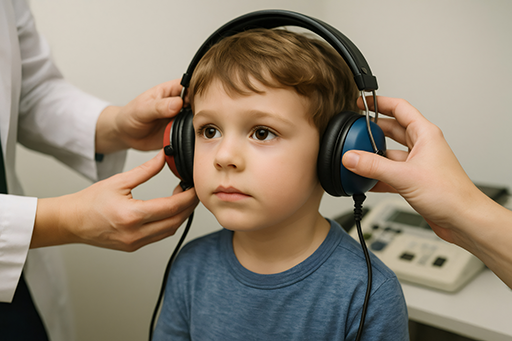
- If you are an adult, you will stay still and feel relaxed. You will hear sounds through earphones that go in your ears.
- After they take off the electrodes, you might see some small red spots. These small red spots usually go away fast.
Most people say the test will not hurt. Your audiologist will be with you to help everything go well. The results will show if your hearing is in the normal hearing range. They will also tell if you need more tests.
The ABR Testing Process Step-by-Step
The ABR test uses surface electrodes on the head. Sound gets sent to the ears during this test. A person can hear things like a click stimulus or some other sound patterns. These sounds help check how the ears and brain work together. The surface electrodes pick up signals from the body. This lets the audiologist see the waveforms to study.
By watching the frequency range, the audiologist can make sure the test results are correct. The test does not cause pain or go inside the body. So, it is a good option for babies and adults who may have hearing loss.
Placement of electrodes and equipment used
Modern ABR tests aim to get the most accurate results. The first thing to do is to place surface electrodes on the child’s forehead. You will also put them on the scalp and the sides of the head by the ears, which are called mastoids. These surface electrodes help pick up quick electrical signals as sound moves through the middle ear.
Tools like bone conduction gear or computer-checked printouts help you see signals as clear graphs. If a child has a problem, like a blockage in how sound goes through the ear, the doctor can use bone conduction checking. This helps the doctor get a better answer.
This better way to test hearing gives doctors what they need. It helps them check hearing the right way, even for different types of people.
Typical duration and patient experience during the test
This procedure is set up to be easy for you. It gives clear results. The ABR test usually takes about 30 minutes to an hour. The time depends on how well the person follows the instructions. For young children, they might need some medicine to help them stay still during the test.
Adults need to relax during the test. There are sound signals given while it goes on. If the doctor uses general anesthesia, the test can take more time. But this is safe if it is done as it should be. Most people will hear a range of noises with different loudness levels. You do not need to worry because the sounds will not hurt or cause pain.
During the ABR test, the team is there to help you feel at ease. They also work hard to make sure you get the best results.
Understanding Your ABR Results
Your abr test results give a clear picture of your hearing health. The test shows if you have normal hearing or if there is something different in the test results.
The audiology department checks your results and matches them with normative data. This lets them find out if there is anything different from what you might expect. They use this to tell you what can be done and may suggest you get more help from a specialist if they feel you will need it. A good thing about these results is that they show if the changes have to do with your nerves, your hearing, or both.
How results are analysed and interpreted
Results from an auditory brainstem response (ABR) test are checked by looking at the waveform made by the sound signals. The person who does the test will look at the latency of wave V along with the normative data. This helps to find out if there is hearing loss. A normal test means that the auditory brainstem and pathways are working well. An abnormal ABR, on the other hand, can show problems like auditory neuropathy or sensorineural hearing loss. The audiology department writes down all the findings in one report. This makes it easy to see if more tests or treatment are needed.
Is the ABR test safe for babies and adults?
The abr test is safe for both babies and adults. This test does not go inside the body, so it will not hurt. There is little chance of risk with the abr test. Most people feel just a bit of discomfort. The test is helpful for doctors to find out about hearing problems. The benefits of the abr test are much more than the small discomfort you may feel when you have it.
Does the ABR test hurt or cause discomfort?
The ABR test is usually not painful and does not go inside your body. A few people may feel a little uncomfortable when the electrodes are placed on their skin. You may also feel uneasy because you have to lie still for some time. But most people say the abr test is easy to get through and not too hard to handle.
How is the ABR test different from a standard hearing test?
The abr test is used to see how the auditory nerve works. It needs small electrodes put on the scalp. A regular hearing test checks how you hear sounds with earphones instead. The abr test can show nerve or brain issues that hearing tests may not find. These problems might be missed by normal hearing checks. That is why the abr test is good for finding certain things regular hearing tests can miss.
| Feature | ABR Test | Standard Hearing Test |
|---|---|---|
| Measures | Neural response | Behavioral hearing thresholds |
| Method | Surface electrodes and sound | Tone/pure-tone via headphones |
| Use cases | Non-verbal subjects, newborns | Adults and cooperative children |
| Diagnostic ability | Detects nerve and brain issues | Limited to behavioral hearing loss |
Will I need someone to accompany me to the ABR test?
It is often a good idea to have someone with you when you go for the abr test, especially if you will get sedation. A friend or family member can stay with you for support. They can also give you a ride home after the test. This can help things go well. It will also help you feel calm and safe.
How soon will I get my ABR test results?
You will get your ABR test results in a few days, but sometimes it can take up to two weeks after you do the test. The time to get your test results may not be the same for everyone. It depends on the place where you have the ABR test and how hard your case is. It is good to ask your healthcare provider when you can expect to know your test results.