Discover how do early hearing tests affect children’s school performance. Learn about testing methods, potential issues, and the connection to academic success.
Finding out about hearing issues early is very important for a child’s growth. A simple hearing test can spot problems before they start to hurt the way a child talks, makes friends, or does at school. Early detection helps to lower the chance of language delays and can help your child do better with their academic performance. This blog will talk about how checking hearing at important times and dealing with any worries right away can help with school results. It also gives tips for parents and teachers on when and how to test for hearing issues.
The Importance of Early Hearing Tests for Children in Australia
Childhood hearing loss can slow your child’s learning, how they talk with people, and their confidence. Early hearing detection, like universal newborn hearing screening, helps find these problems soon. This way, there are greater chances to get early intervention and support. If there is not a quick diagnosis, hearing loss can cause problems for a child’s school performance and chances to do well at work later in life.
In Australia, there are strong rules for early hearing detection. Screening programs give checks starting right at birth. This helps spot conditions like congenital hearing loss and means children can get help straight away. When you deal with hearing problems early, kids have better chances at communication and doing well in school.
Prevalence of Childhood Hearing Loss
Childhood hearing loss is a common issue in children worldwide, with 3 to 4 out of every 1,000 newborns having congenital hearing loss. Early hearing screening is crucial as it helps identify potential problems early. Hearing loss can start early or later, with conductive hearing loss often seen in primary school children due to repeated ear infections. This type of hearing loss can be temporary but can slow a child’s development without treatment. Progressive hearing loss is more common in older children, caused by lasting infections or noise exposure. Regular hearing checks can help identify problems early, ensuring every child receives the necessary support to succeed in school.
National Guidelines and Policies on Hearing Screening
National policies play a crucial role in promoting healthy hearing in children. Universal newborn hearing screening, supported by the World Health Organization and Europe, is a key method for detecting hearing problems early. Australia supports these plans and conducts hearing checks before school to detect all types of hearing problems. However, many low-income individuals lack access to hearing screening. Local governments work to ensure all children receive timely screening, ensuring they receive the necessary support for a healthy growth. Early hearing checks help children develop the necessary language skills and language abilities.
How Hearing Impacts School Performance
If hearing loss is not treated, it can really affect your child in school and change how they feel. Children can have language delays because of hearing impairment. This makes it hard for them to take part in class and learn with others.
There are also problems with psychosocial development if hearing impairment is not found early. This can make it tough for your child to get along with other students and teachers. Helping your child with hearing difficulties early gives them a better chance for success. It opens up good ways for them to learn, make friends, and do well in school.
Effects of Hearing Loss on Language Development
Language development is closely tied to a child’s ability to hear clearly during early growth stages. When hearing loss goes undetected, it can impact how children learn to speak, read, and interact socially. Early testing and intervention are key to reducing long-term educational and communication challenges.
Key Effects of Hearing Loss on Language Development
- Hearing loss makes it harder for children to distinguish sounds, which delays speech development and affects early communication skills.
- Children with hearing difficulties often speak later than their peers due to reduced exposure to clear sound input during critical language-learning periods.
- Speech audiometry tests identify how well a child hears and understands words, allowing professionals to detect patterns that signal potential language delays.
- Auditory Brainstem Response (ABR) tests evaluate how well the hearing nerve sends sound signals to the brain, helping determine the type and severity of hearing loss.
- Without early intervention, hearing loss can slow down vocabulary growth and grammar acquisition, creating long-term challenges in learning and literacy.
- Hearing aids and other auditory support tools amplify sounds, helping children build stronger language and speech processing skills.
- Language-rich environments like classrooms and homes filled with conversation and sound support faster language development and reduce the impact of hearing loss.
Academic Challenges Faced by Children with Undiagnosed Hearing Issues
Children who have undetected hearing problems can find learning harder in school. They may have a tough time understanding what teachers say, especially when the classroom is noisy. It is also hard for them to learn new ideas that depend on what people say out loud.
- They can have a hard time talking with others. This can make it tough to connect with their classmates and teachers.
- They may hear things the wrong way or not at all. This can make it hard for them to follow along with lessons.
- They might act out or seem not to listen. This bad classroom behavior can happen because it is hard for them to hear, and that makes them upset.
Getting the right educational support and help for hearing problems can really make a difference. These steps can change how well students do at school and help them get the most out of the learning experience.
When Should Children Be Tested for Hearing Issues?
Children’s hearing needs change as they get older. It is important to do timely screening to help them develop well. Experts say that hearing should be checked right from when a child is an infant. It is best to do this screening in the first few months of their life.
You should keep doing follow-up hearing tests every year. This is to find any hearing loss that may show up over time or may be hard to notice at first. Regular checks are a good idea at times like when kids start preschool and when they begin primary school. These help with early identification of hearing loss. When screening takes place, it gives a strong base for help if a child needs it.
Recommended Age Milestones for Hearing Screening
Hearing screening needs to match with a child’s important growth stages. Newborns get hearing checked using otoacoustic emissions and auditory brainstem response tests. This helps find congenital hearing loss early.
For preschool kids, hearing screening uses fun tests like play audiometry. These check how a child reacts to some sounds at different levels. They keep it interesting for young children. After that, school-aged children get checked with regular audiometry. This test checks for hearing loss in noisy school settings.
| Age Group | Recommended Screening Tests |
|---|---|
| Newborn to 3 years | OAE, AABR, Visual Reinforcement Audiometry |
| Preschool (3-5 years) | Play Audiometry, Tympanometry, Speech Audiometry |
| School Age (5 years +) | Conventional Audiometry, OAE, Additional tests as needed |
Signs Parents and Educators Should Watch For
Early detection of hearing loss is crucial. Parents should monitor their child’s reaction to loud sounds and difficulty reaching big speech steps. Teachers may observe students frequently repeating their words, especially when background noise is present, indicating issues with sound perception.
- No response to loud noises, even when these are above usual levels.
- Delays in saying first words, such as “mama” or “dada.”
- Many ear infections that bring signs of hearing loss for a short time.
- Hard time joining talks because they miss some sounds.
Types of Hearing Tests for Children
There are different kinds of hearing tests made for every stage of a child’s growth. For newborn hearing screening, tests like otoacoustic emissions and auditory brainstem response are popular. These give clear information about the child’s hearing health.
When children get older, tests such as speech audiometry help find out how they understand sounds in all types of places. Full hearing screening helps to have the right diagnosis and lets doctors choose the best help for them, so the children get better results.
Newborn Hearing Screening Programs
Newborn hearing screening helps spot any hearing loss right after a baby is born. These programs use something called otoacoustic emissions testing. This test checks how a baby reacts to different sounds, and it also looks at how well their middle ear is working. Early detection means finding hearing problems as soon as possible, and this is why universal newborn hearing screening is so important. The World Health Organization supports getting these tests done early, so babies who need help get care on time. Finding hearing impairment early will make it much easier for a child to develop language skills. This can also lead to better learning at school, and a better quality of life all through the years. Early help makes sure hearing loss will not hold kids back from reaching their best.
Audiological Assessments for Preschool and School-Aged Children
Comprehensive audiological assessments are important for preschool and school-aged children. These tests help to find possible hearing problems early. The steps often include speech audiometry, tympanometry, and otoacoustic emissions tests. These all help measure how the middle ear works and how well the child hears sound.
They check for any hearing loss, like conductive or sensorineural hearing loss. Any hearing impairment can affect a child’s language development and can make a difference in their academic performance. Early detection by using these tests means that children get the help and support they need right away. This gives them a better chance to grow and learn well in different settings.
Common Hearing Problems Detected in Children
Many kinds of hearing problems can show up in children. These may have a big impact on their time at school. Conductive hearing loss can come from having chronic ear infections or there being fluid in the middle ear. This can make it hard for children to hear different sounds. These problems are usually temporary. Sensorineural hearing loss is different. This happens when the inner ear or hearing pathways get damaged. When that happens, the hearing loss can be permanent.
If hearing problems are not found or treated while kids are growing, this can slow their language development. It can also hurt their academic performance. On top of that, it may make it hard for them in psychosocial development.
Conductive vs. Sensorineural Hearing Loss
Conductive hearing loss happens when something blocks sound in the outer or middle ear. This can be because of fluid, ear infections, or problems in the ear’s structure. Most of the time, this type of hearing loss can be treated. People often get much better hearing after treatment.
Sensorineural hearing loss is different. It is caused by damage in the inner ear or in the nerve that helps people hear. Usually, people with this kind of hearing loss will have problems that cannot be fixed.
It is important to know about both types. Early detection and treatment can improve a child’s language development, academic performance, and quality of life. Hearing screening for children matters a lot. It helps to find hearing loss early, so children can get help quickly.
Temporary Conditions like Glue Ear and Their Impact
Glue ear happens when fluid gathers in the middle ear. This can often cause conductive hearing loss in young children. When kids have glue ear, they may find it hard to hear sounds, especially when there is background noise. This makes it tough for them to make sense of sounds. Because of that, their language development can slow down. It can also lead to problems with academic performance later on.
Early intervention is important. Regular hearing check-ups can help spot glue ear early. If glue ear is treated early, it can lower the risk for problems with language, learning, and the overall growth of these children. Helping with glue ear can really make a difference in their education and future.
The Screening Process: What to Expect
A child’s recent medical history will often be reviewed before a hearing test. This looks at any signs of hearing impairment, like problems with language development. The process usually starts with a simple hearing screen. This test checks for otoacoustic emissions and also looks at middle ear function. It is done in a quiet room to help lower background noise.
For a full hearing test, audiometric screening is used. This will measure how the child reacts to different sounds. It helps to find out if there are any hearing problems in children so the results will be accurate. Parents and teachers usually get the results soon after the test for timely help if needed.
Steps Involved During a Typical Hearing Test
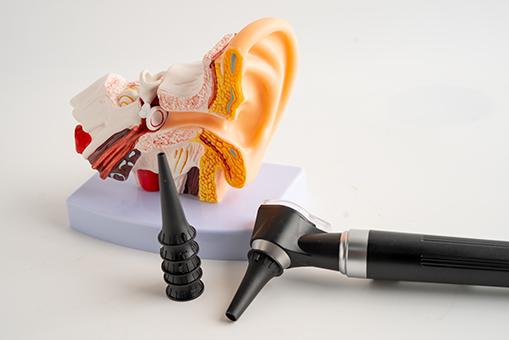
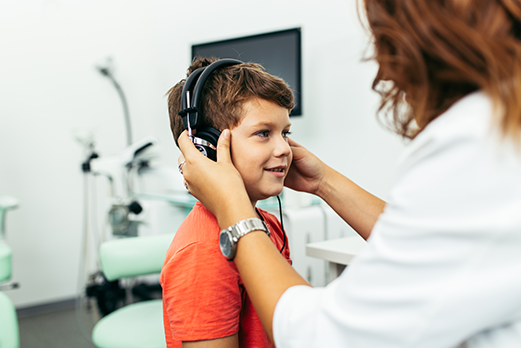
A usual hearing test has a few clear steps to see how well a child can hear. First, the audiologist looks inside the ear with an otoscope. They check for problems in the ear, like middle ear fluid or earwax. Then, the child hears many sounds that go up and down in frequency and loudness. The audiologist checks how the child responds to these sounds. Techniques like otoacoustic emissions or other tests help make sure all parts of hearing be checked. This process helps with early detection of any hearing problems. Finding these problems early matters because they can affect language development and academic performance.
How Results Are Communicated to Parents and Schools
Results from hearing screenings are shared in a way that brings together healthcare workers, teachers, and parents. After the screening, families get full reports. These reports talk about your child’s hearing and mention if there are any problems with middle ear function or signs of hearing loss. This helps parents and health staff talk right away about what to do next. If a trouble is found, your child can be sent for more hearing tests at once.
The school will know about the screening results too. This helps teachers give your child the right educational support. Getting help on time can really make a big difference for your child’s language development and academic performance. This way, all people around your child can work together to help them do well in life.
Interventions After Early Detection
When a child shows signs of hearing problems after early screening, there are many ways that can make their life better. Medical steps, like using hearing aids or putting in tubes for chronic ear infections, help improve how the middle ear works. Children with strong hearing loss might get cochlear implants to help them hear better.
Educational support is also very important. Teachers can use special classroom methods to help students with language development and school work. When audiologists, parents, and teachers work together, they help create the best plan for every child. This team effort will give the right support for each child with hearing loss, which helps their quality of life.
Medical and Hearing Device Solutions
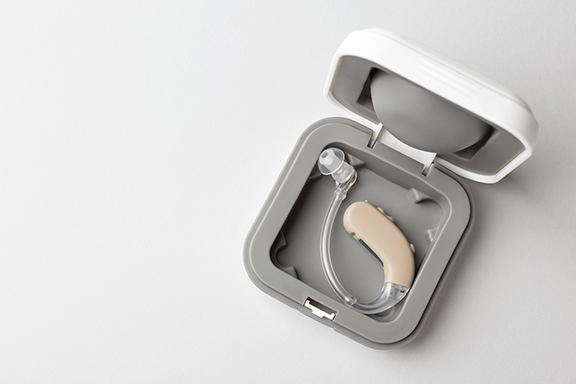
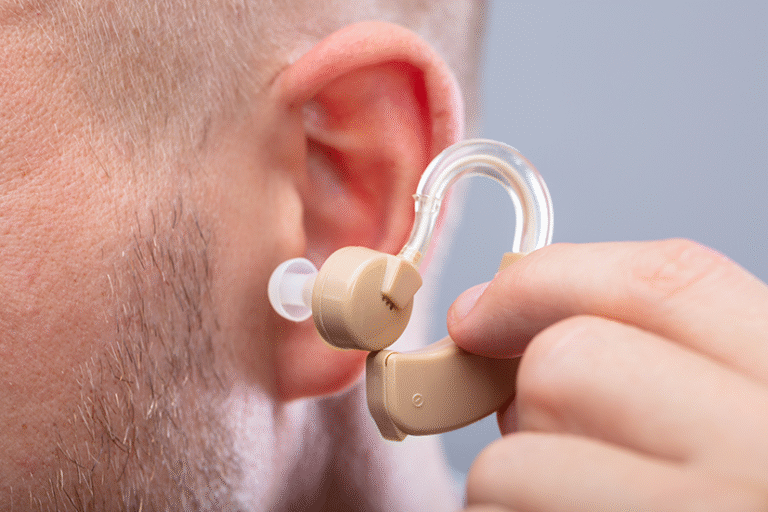
Early detection of hearing loss in children is important. It helps doctors find good ways to help. Some children use hearing aids to make sounds louder. This can help children with conductive or sensorineural hearing loss. If hearing loss is permanent, cochlear implants may be used. These help by sending sound straight to the hearing nerve.
Every child’s hearing needs and problems can be different. So, doctors choose what works best for each child. These treatments help children with hearing loss do better with speaking and listening. This also lets them join in with others more easily. With early detection, kids can have better language development, improved academic performance, and a better quality of life.
Educational Support and Classroom Strategies
Giving the right educational support for children who have hearing loss is important to help them do well in school. Using classroom ideas like letting them sit at the front and lowering background noise can help these students better connect with the lesson. Adding audiovisual aids can make it easier for them to understand, as these tools let students use different sounds and visual hints together. It is also good for teachers, parents, and experts to talk openly. This helps everyone work together on what each child needs. With the right teamwork, students can build better language development and feel more sure and happy in the classroom.
Long-Term Benefits of Early Hearing Screening
Early hearing screening plays a big part in a child’s growth. It helps spot hearing problems early, like sensorineural hearing loss or conductive hearing loss. This means kids can get help sooner. When we find hearing loss early, children have a better chance to do well in school, speak clearly, and learn language. This boost in academic performance makes it easier for them to join in at school and learn with others.
The benefits do not stop there. Early detection and support for hearing loss also help kids get better at social skills. They feel more confident and happy in their day-to-day lives. With the right help and resources in place, children with hearing problems enjoy a higher quality of life. That support lets them grow and do their best in both school and life as they get older.
Improved Speech and Language Outcomes
Early detection with newborn hearing screening is very important for language development. When children have hearing loss, they do much better if the problem is found early. It gives them a chance to get the help they need faster and this helps them interact better with people around them. This early action stops problems before they start and helps improve their listening and speaking skills. It also helps them talk with others with more ease. Devices such as hearing aids and cochlear implants let many children build strong language skills for their age. This leads to better academic performance, and it helps them feel good and fit in with others their age. The effects of early hearing screening are seen as children grow. It helps give them a strong start and helps them do well for the rest of their lives.
Enhanced Academic and Social Success
Improved academic and social success happens with early hearing detection programs. When children have normal hearing, they join in more with classroom talks. This helps grow their language skills and makes their thinking better. But, if children have hearing loss that no one knows about, they may find it hard to talk with others. This can make them do worse at school and feel apart from other people. Early intervention, like using the right support in education or giving the right hearing aids, can help fix these problems. With help, all kids can do well in different places. When people spot hearing loss early on, it makes their quality of life and learning better now and in the future.
Overcoming barriers to hearing screening in Australia
Hearing screening in Australia faces multiple challenges, particularly in rural and remote communities. Limited access to trained audiologists, a shortage of diagnostic equipment, and a lack of public awareness delay early detection. Financial constraints, geographic isolation, and low awareness further prevent many families from accessing regular hearing assessments.
Why is early hearing screening important?
Undiagnosed hearing loss affects a child’s speech, language, and academic performance. Early detection through newborn screening and follow-up care allows children to access early intervention services. Children diagnosed before 6 months of age often achieve significantly better language outcomes than those identified later.
| Factor | Impact on Early Detection |
|---|---|
| Lack of trained professionals | Delays in testing and referrals |
| Geographic isolation | Missed appointments and follow-ups |
| Limited awareness | Parents may not seek testing |
| Cost of services | Reduces access to routine screening |
What are the barriers in rural and remote areas?
Rural and remote regions face the most serious access issues. These areas often lack pediatric audiologists, making timely diagnosis difficult. Children in remote communities are 3 to 5 times more likely to experience delays in hearing assessment than those in urban areas.
- Shortage of specialists: Limited availability of pediatric audiologists leads to appointment backlogs.
- Transportation difficulties: Families often travel long distances, increasing the chance of missed appointments.
- Delayed diagnosis: Without newborn screening follow-up, some children go years without detection.
- Technology gaps: Lack of tele-audiology infrastructure in isolated clinics limits access to remote consultations.
How can parental awareness improve hearing outcomes?
Educating parents and caregivers leads to earlier action. When families understand the signs of hearing loss and the importance of newborn hearing screening, they are more likely to seek care promptly. Public health campaigns and school-based outreach programs help bridge this information gap.
Examples of effective awareness tools:
- Audiological screening kits distributed to maternal health clinics
- Classroom posters showing signs of hearing difficulty
- Parent workshops with local speech pathologists
- Real-life testimonials from families of diagnosed children
What are early signs of hearing loss in children?
Children with hearing problems often show noticeable developmental delays. Identifying these early signs can prevent years of academic and social struggle.
| Early Sign | Age Range |
|---|---|
| No response to sound or name | 0–12 months |
| Delayed or unclear speech | 12–36 months |
| Difficulty following verbal instructions | 3–6 years |
| Frequently asking “What?” or “Huh?” | 4+ years |
| Lack of attention or poor participation | School age |
How often should children have their hearing tested?
Children should receive hearing tests at birth, before school, and every 2–3 years during primary school. More frequent testing is recommended if there are speech delays, ear infections, or parental concern.
| Age | Recommended Test Type |
|---|---|
| Newborn | Automated ABR / OAE |
| 4–6 years | Pure-tone audiometry |
| Every 2–3 years | Behavioral audiometry |
| As needed | Tympanometry, speech tests |
Can hearing loss be mistaken for learning or behavioral problems?
Yes. Untreated hearing loss can mimic ADHD, speech disorders, or cognitive delay. Teachers and parents may misinterpret the child’s inattentiveness or lack of participation as behavioral problems, when the root cause is undetected auditory impairment.
Examples of misinterpretation:
- Child labeled as “defiant” due to failure to respond in class
- Learning delay diagnosed without hearing assessment
- Emotional outbursts caused by communication frustration
What support is available in Australian schools?
Children with diagnosed hearing loss are supported through inclusive education programs. Most states provide individual education plans (IEPs), assistive listening devices, and classroom accommodations.
Support options in schools:
- FM systems and sound-field amplification
- Speech therapy sessions integrated into school hours
- Teacher aides trained in hearing support
- Collaboration with audiologists and special educators
Is hearing screening mandatory for school entry in Australia?
Hearing screening is not universally mandated at school entry in Australia. However, some states such as New South Wales and Victoria offer routine checks at kindergarten or prep level. Policies differ by jurisdiction, so parents must consult local education departments for current screening requirements.
| State / Territory | School Entry Screening Policy |
|---|---|
| New South Wales | Routine hearing checks in early school |
| Victoria | Screening via School Nursing Program |
| Queensland | Limited to high-risk children |
| South Australia | Voluntary early years hearing checks |
| Western Australia | Targeted screening for specific groups |