Curious about hearing aids? Discover what is bone anchored hearing aid mapping? Learn how this process enhances your hearing experience effortlessly on our blog.
Living with hearing loss can be challenging, but modern technology offers incredible solutions. A bone anchored hearing aid (BAHA) is a powerful device that uses bone conduction to help you hear clearly. However, simply getting the hearing aid isn’t the final step. To unlock its full potential, it needs to be perfectly tuned to you. This is where “mapping” comes in. This crucial, behind-the-scenes process customizes your device, making a world of difference in your hearing and quality of life.
Understanding Bone Anchored Hearing Aid Mapping
Have you ever wondered how a hearing device is tailored specifically for you? For a bone anchored hearing aid, this customization is called mapping. It’s a detailed procedure where an audiologist programs your sound processor to match your exact hearing needs, including those with profound hearing loss, ensuring you receive the clearest sound possible.
This process is vital because no two cases of hearing loss are the same. By adjusting the settings, mapping transforms a standard hearing device into a personalized solution. This customization is key to improving your quality of life and getting the most out of bone conduction technology. Understanding what mapping entails is the first step toward a better hearing experience.
Definition of Bone Anchored Hearing Aid Mapping
Bone anchored hearing aid mapping in the United States is the technical process of programming your hearing device. Think of it as creating a personalized “map” for sound to travel to your inner ear. An audiologist uses specialized software to adjust the settings of the external sound processor, which is attached to the implant.
The goal is to configure the device to best compensate for your specific type of hearing loss, whether it’s conductive hearing loss, mixed hearing loss, or unilateral sensorineural hearing loss associated with single-sided deafness. The audiologist fine-tunes various parameters, such as volume and frequency response, to ensure sounds are clear, comfortable, and natural for you.
Ultimately, mapping is what activates your bone conduction hearing aids and makes it work for your unique hearing profile. It is a non-invasive procedure that connects the technology of the hearing device to your individual auditory needs, relying on the principle of bone conduction to restore hearing.
How Mapping Differs from Conventional Hearing Aid Programming
The mapping process for a bone anchored hearing aid is fundamentally different from the programming of a conventional hearing aid. A traditional hearing aid works by amplifying sound and sending it through your ear canal, similar to drug administration methods for various medical devices. Its programming focuses on adjusting this amplified acoustic signal.
In contrast, a bone anchored hearing aid bypasses the ear canal and middle ear entirely, including the deaf side. It sends sound vibrations directly through the skull to the inner ear. Therefore, mapping this device involves programming how these vibrations are generated and transmitted, which is a completely different mechanism. This is why a BAHA can be a solution for people who cannot wear a conventional device due to chronic infections or ear malformations.
This process also differs from programming a cochlear implant. While both are implanted devices, a cochlear implant directly stimulates the auditory nerve, bypassing a damaged inner ear. A BAHA works with a functioning inner ear, making its mapping approach unique to bone conduction technology and enhancing sound localization.
Key Features of Bone Anchored Hearing Aid Systems
A bone anchored hearing aid system traditionally has three main parts, as noted in several studies found on Google Scholar, that work together to restore hearing. Understanding these components helps clarify how the mapping process can enhance your quality of life.
The system is built around a small titanium implant. This implant is surgically placed into the skull bone behind your ear. Over time, a process called osseointegration occurs, where your bone fuses with the implant, creating a stable and permanent foundation at the implant site.
The other key components are:
- An external abutment or connector that attaches to the implant and sits just outside the skin.
- A detachable sound processor, which is the part that captures sound and is programmed during mapping, especially for young children who may need tailored approaches.
- Some newer systems may use a magnetic connection instead of an abutment to link the sound processor to the implant.
The Role of Mapping in Hearing Improvement
Mapping is the critical link between the hearing aid technology and tangible hearing improvement. Without precise mapping, even the most advanced device won’t deliver its full benefits. The process ensures that the sound you perceive is optimized for clarity and understanding.
Through mapping, an audiologist adjusts the settings to match your specific hearing loss profile. This customization directly impacts the sound quality, reducing distortion and ensuring that speech is intelligible, even in noisy environments. It’s what makes the difference between simply hearing sounds and understanding conversations.
By fine-tuning the device to your personal needs, mapping helps you adapt to your new way of hearing more quickly and comfortably. This personalized approach is essential for achieving a significant improvement in your hearing ability and, as a result, a much better quality of life.
The Science Behind Bone Anchored Hearing Aids
The magic of a bone anchored hearing aid lies in its use of bone conduction, making it an excellent option for those with hearing impairment. Instead of pushing sound through the air in your ear canal, it uses the natural ability of your skull bone to transmit vibrations. A small titanium implant provides a direct connection for these vibrations to travel to your inner ear.
Anyone with this type of hearing device needs to have it mapped. The sound processor captures sound, but it’s the mapping that tells the processor how to convert that sound into vibrations tailored for your specific hearing loss. The following sections will explain this science and its components in more detail.
How Bone Conduction Technology Works
Bone conduction is a natural way we hear sound. Have you ever noticed how your voice sounds different when you plug your ears? That’s because you’re hearing it largely through vibrations in your skull. A bone anchored hearing device takes advantage of this same principle to help people with certain types of hearing loss.
The device’s sound processor captures sound waves from the environment. Instead of sending them into the ear canal, it converts them into tiny vibrations. These vibrations are then transmitted from the processor, through the implant, and into the mastoid bone, which is part of the temporal bone of your skull.
From there, the vibrations travel through the skull directly to your inner ear, or cochlea. This process stimulates the hair cells inside, which then send signals to the auditory nerve for your brain to interpret as sound. It effectively bypasses any issues in the outer or middle ear that may be causing the hearing loss.
Components of a Bone Anchored Hearing Aid
A bone anchored hearing aid is a sophisticated system comprised of a few key parts. Each component plays a distinct role in bypassing the external ear canal and delivering sound directly to the inner ear.
The foundation of the system is a small titanium implant, which is surgically placed in the skull bone (mastoid) behind the ear. This implant fuses with the bone, creating a solid anchor. An abutment, or connector, is attached to this implant and protrudes slightly through the skin at the implant site.
The external sound processor is the “brain” of the device. It looks like a small hearing aid and clips onto the abutment. This processor houses the microphone that picks up sound and the technology that converts it into vibrations. This is the part that is customized during the mapping process.
| Component | Function |
|---|---|
| Titanium Implant | A small screw surgically placed in the skull bone that fuses with the bone to provide a stable anchor. |
| Abutment/Connector | Connects the external sound processor to the titanium implant. |
| Sound Processor | An external device that captures sound, converts it to vibrations, and is programmed (mapped) to the user’s needs. |
The Importance of Precision in Device Settings
Precision is everything when it comes to the device settings of a bone anchored hearing aid. Unlike a conventional aid that you can easily adjust yourself, a BAHA’s core programming requires professional expertise to ensure it functions correctly and comfortably.
The accuracy of the mapping directly determines the sound quality you will experience. If the settings are not precise, sounds can seem distorted, too loud, or too soft, which defeats the purpose of the hearing device. An audiologist uses your hearing test results to precisely calibrate the sound processor, ensuring the vibrations sent to your inner ear are optimized for your specific hearing loss.
This meticulous attention to detail during the mapping process is what unlocks the device’s potential. It ensures you not only hear but can also understand speech clearly, distinguish between different sounds, and enjoy a rich, full hearing experience.
Why Mapping Is Critical for Bone Anchored Hearing Aids
So, why is mapping such a big deal for your bone anchored hearing aid? Simply put, mapping is what makes the hearing device truly yours. It’s the step that customizes the technology to your individual hearing loss, turning a piece of equipment into a life-changing solution.
Without this critical process, you would not experience the full benefits of bone conduction hearing. Proper mapping is directly linked to better sound quality, greater comfort, and an overall improvement in your quality of life. The following sections explore these crucial benefits in more depth.
Ensuring Optimal Sound Quality
One of the primary goals of mapping is to achieve the best possible sound quality. A bone anchored hearing device has a distinct advantage because it sends sound directly to the bone, bypassing skin and tissue that can dampen the signal. Mapping harnesses this advantage by fine-tuning the sound processor.
During the procedure, your audiologist adjusts settings across different frequencies to match your hearing needs. This ensures that soft sounds are audible without making loud sounds uncomfortable. The result is a clearer, richer, and more natural sound experience compared to an unprogrammed device.
This optimization is crucial for understanding speech, especially in noisy situations. By personalizing the device settings, mapping significantly improves your ability to participate in conversations and engage with the world around you, which has a profound impact on your quality of life.
Enhancing Comfort and Natural Sound Experience
Beyond clarity, mapping plays a key role in making your hearing experience feel comfortable and natural. A major benefit of a bone anchored hearing aid is that it leaves the ear canal open. This eliminates the “plugged up” feeling that some people experience with conventional hearing aids and reduces the risk of skin irritation.
Mapping builds on this inherent comfort by tailoring the sound itself. Your audiologist works to ensure that the vibrations produced by the device create a sound that is as close to natural hearing as possible. They will adjust the settings based on your feedback to eliminate any harshness or tinniness.
Achieving a natural sound is vital for long-term satisfaction with your hearing aid. When sounds are perceived comfortably and naturally, you can wear your device all day without fatigue. This allows you to forget about your hearing loss and simply enjoy the sounds of life.
Supporting Individual Patient Needs
Every person with hearing loss is unique, and mapping is the process that addresses these individual patient needs. Your audiologist considers many factors beyond just your hearing test results, including your medical history, the specific cause of your hearing loss, and your lifestyle.
For example, the ideal device settings for someone with single-sided deafness will be different from those for someone with conductive hearing loss from chronic ear infections. The mapping process allows for this level of personalization, ensuring the device is programmed to provide the maximum benefit for your specific condition.
By taking your personal preferences and listening environments into account, your audiologist can create different programs for different situations, such as for quiet conversations or noisy restaurants. This tailored approach ensures your hearing device supports you in all aspects of your life, significantly enhancing your quality of life.
Preparation for the Mapping Appointment
Preparing for your mapping appointment can help you get the most out of the session. This appointment is an exciting step, as it’s when your new hearing device will be activated for the first time. It’s a collaborative process between you and your audiologist.
Before you go, it’s helpful to think about your hearing goals and any specific listening situations where you struggle. Your audiologist will need information about your hearing and medical history to best program the device. The following sections will walk you through what to expect and how you can prepare.
What Patients Should Expect
Your mapping appointment is a straightforward and pain-free process. It typically takes place a few weeks or months after your implant surgery, once the implant site has fully healed and integrated with the bone.
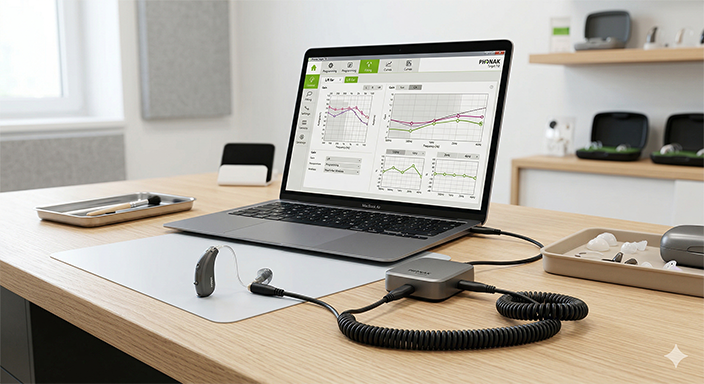
When you arrive, the audiologist will first inspect the implant site to ensure it’s healthy. Then, they will attach the sound processor to the abutment for the first time. The audiologist will connect the processor to a computer with specialized software to begin the programming.
During the appointment, you can expect the following:
- The audiologist will play various sounds, like beeps and speech, at different pitches and volumes.
- You will be asked to provide feedback on what you can hear and how it sounds.
- The audiologist will use your feedback to adjust the hearing device settings.
- You will learn how to attach, remove, and care for your sound processor.
Pre-Mapping Assessment Procedures
Before the actual mapping begins, your audiologist will perform a few key assessment procedures. This pre-mapping evaluation ensures that the programming is based on the most accurate and up-to-date information about your hearing.
First, your medical history and the details of your hearing loss will be reviewed. The audiologist will also physically check the implant area to make sure the skin is healthy and healing well. They will then likely perform some baseline hearing tests. These tests might measure your ability to hear different tones and your speech recognition scores without the device.
These assessments provide a starting point for the mapping. For instance, testing the air conduction and bone conduction thresholds of your hearing ear helps the audiologist understand your auditory capabilities. This data is then used to create the initial program for your device.
Information Your Audiologist Will Need
To personalize your mapping, your audiologist will need some important information from you. Being open and thorough when sharing this sensitive information is key to a successful outcome. Your hearing history is one of the most critical pieces of the puzzle.
You should be prepared to discuss when your hearing loss began, how it has progressed, and what experiences you’ve had with other hearing aids, if any. Details about your specific type of hearing loss and any related medical history, such as chronic ear infections or previous surgeries, are also very helpful.
Furthermore, tell your audiologist about your lifestyle and listening needs. Do you work in a quiet office or a noisy factory? Do you enjoy concerts or quiet evenings at home? This information helps the audiologist create programs that will improve your quality of life in the situations that matter most to you.
The Mapping Process Step-by-Step
BAHA mapping is a structured, interactive session where audiologists fine-tune your device using both clinical data and your real-time feedback. Each step—from setup to personalization—ensures your device delivers clear, comfortable, and natural hearing.
| Step | What Happens | Purpose | Patient Tip |
|---|---|---|---|
| 1. Initial Device Connection & Setup | Audiologist attaches the sound processor to the abutment and connects it to specialized software | Enables access to internal settings for customization | Stay relaxed—this step is quick and painless |
| 2. Adjusting Frequency & Volume | Series of tones are played to identify your hearing thresholds and comfort levels | Balances clarity and comfort across all sound ranges | Give honest feedback about sound clarity and loudness |
| 3. Personalising the Program | Multiple programs are created for different listening environments (e.g., daily, noisy, music) | Tailors your hearing experience to your lifestyle | Ask for adjustments to suit your daily routines and needs |
After the Mapping: Follow-Up and Fine-Tuning
Your hearing journey doesn’t end after the first mapping appointment. Your brain needs time to adapt to the new sounds, and your initial device settings may need some adjustments. Follow-up and fine-tuning are essential parts of the process.
Regular check-ins with your audiologist ensure your device continues to meet your needs as you get used to it. Sometimes, a remapping is necessary to optimize your hearing and quality of life further. Let’s look at what happens after your initial programming.
Monitoring Patient Response
After your initial mapping, your audiologist will want to monitor your response to the new sound processor. This involves both your subjective feedback and objective measurements to see how well the device is working for you in your daily life.
You will likely be asked to keep a journal or notes about your experiences. How do things sound at home, at work, or in social settings? Are there any sounds that are uncomfortable or unclear? This patient response is incredibly valuable for making future adjustments that can improve your quality of life.
Your audiologist may also schedule a follow-up appointment to perform tests, such as measuring your speech reception threshold in quiet and in noise. Comparing these results to your pre-mapping scores provides concrete data on how much your hearing has improved and guides any necessary fine-tuning.
When to Schedule Remapping Appointments
So, how often do you need to go back for remapping? Initially, you can expect a follow-up appointment a few weeks to a month after your first mapping. This allows you to get used to the device and identify any immediate adjustments needed for the device settings.
After the initial period, most users have their mapping checked annually during a routine clinic visit. This ensures the device is functioning optimally and allows the audiologist to make any changes based on your feedback or any shifts in your hearing.
However, you should schedule a remapping appointment sooner if you notice a significant change in your hearing, if sounds become distorted or uncomfortable, or if you feel you are not getting the same benefit from your device. Your audiologist is your partner in managing your hearing loss, so don’t hesitate to reach out.
Troubleshooting Common Issues
Even with expert mapping, you might occasionally run into some common issues. Fortunately, many of these can be easily resolved through simple troubleshooting or a quick visit to your audiologist for an adjustment to your device settings.
For example, if you experience skin irritation around the abutment, it’s often a matter of adjusting your cleaning routine. If sounds are suddenly unclear, it could be as simple as a low battery in your sound processor. Difficulty hearing in background noise is a common challenge for anyone with hearing loss, and your audiologist can often adjust your programs to help.
Here are some common issues and potential solutions:
- Whistling/Feedback: This may mean the processor isn’t seated correctly or the programming needs adjustment.
- Weak or No Sound: Check the battery, ensure the processor is on, and clean the connection point.
- Skin Irritation: Follow your surgeon’s and audiologist’s cleaning instructions carefully.
- Poor Sound in Noise: Ask your audiologist about activating or adjusting noise reduction programs.
Who Performs Bone Anchored Hearing Aid Mapping in Australia
In Australia, BAHA mapping is handled by qualified audiologists with specialized training in implantable hearing solutions. These professionals often work within multi-disciplinary teams alongside ENT surgeons in advanced clinical settings to ensure precise, patient-centered care.
| Focus Area | Key Insight | Impact on Patient Care | Practical Takeaway |
|---|---|---|---|
| Qualifications of Audiologists | Audiologists hold a master’s degree and accreditation (e.g., Audiology Australia), plus device-specific manufacturer training | Guarantees safe, precise, and personalized BAHA programming | Always choose accredited audiologists with implant experience |
| Multi-disciplinary Care Teams | Care involves collaboration between ENT surgeons and audiologists | Ensures continuity from surgery to ongoing programming | Seek clinics where surgeons and audiologists work together |
| Clinic Settings and Accessibility | Mapping is available in hospitals, university clinics, and implant-focused private practices | Centralized expertise improves long-term hearing outcomes | Choose clinics with BAHA technology, follow-up support, and experienced staff |
How often should bone anchored hearing aid mapping be done?
After your initial mapping, a follow-up is usually scheduled within a few weeks. After that, routine remapping of your hearing device is typically done annually. However, you should schedule a visit for device settings adjustments if you notice any changes in your hearing loss or the performance of your aid.
Are there risks or side effects associated with bone anchored hearing aid mapping?
The mapping process itself is non-invasive and has no risks or side effects. The potential risks, such as skin irritation or infection at the implant site, are related to the surgical aspect of the hearing aid, not the programming. Proper hygiene greatly minimizes these risks, improving your quality of life.
Does mapping for bone anchored hearing aids differ from other types of hearing aids?
Yes, it is very different. Mapping a bone conduction device involves programming vibrations sent through the skull, which is unlike programming a conventional hearing aid that amplifies sound for the ear canal. It also differs from a cochlear implant, which directly stimulates the auditory nerve after a more complex surgical procedure.