Curious about “what is cochlear implant mapping?” Discover its importance for clearer speech and improved listening in our insightful blog post!
If you or a loved one is living with significant hearing loss, you may have heard about cochlear implants. These remarkable devices have transformed lives by restoring a sense of sound. But getting the implant is only the first step. The key to unlocking clear sound and improving speech perception lies in a process called “mapping.” This regular programming is what customizes the device to your unique needs, turning electrical signals into a world of understandable sounds.
Understanding Cochlear Implants and Their Impact on Hearing
A cochlear implant is a sophisticated medical device designed for individuals with profound hearing loss who don’t get much benefit from traditional hearing aids. Unlike hearing aids, which amplify sound, cochlear implants bypass damaged parts of the inner ear. They use electrical stimulation to send sound signals directly to your auditory nerve.
This direct connection is what makes them so effective for improving speech perception. However, the device needs to be programmed perfectly for you. This is where mapping comes in, as it fine-tunes the performance of your implant for the best results. Let’s explore how these devices work and who is a good candidate for one.
How Cochlear Implants Work to Restore Sound
The function of a cochlear implant is quite different from the natural hearing process. It starts with an external sound processor worn behind the ear. This component captures sound signals from your environment and transmits them to a receiver that was surgically placed under the skin.
From there, the receiver sends the signals to tiny electrodes inserted into the cochlea, which is the inner ear organ. These electrodes are responsible for creating the electrical signals that stimulate the auditory nerve. This part of the process essentially replaces the function of the damaged hair cells in the cochlea.
Finally, the auditory nerve carries these impulses to the brain, which learns to interpret them as meaningful sound. The process of mapping involves carefully adjusting the settings of these electrical signals to ensure the sound you perceive is both clear and comfortable.
Who Can Benefit from a Cochlear Implant?
Deciding to get a cochlear implant involves a thorough evaluation to determine if you are a suitable candidate. The primary candidates are adults and children who experience significant hearing difficulties that are not resolved with hearing aids. This process ensures the implant is the right choice for your specific situation.
An audiologist and medical team will assess several factors before making a recommendation. Generally, the ideal candidate for a cochlear implant meets certain criteria. These often include:
- Having significant sensorineural hearing loss, which is often profound hearing loss.
- Receiving little to no benefit from properly fitted traditional hearing aids.
- Being in good general health without medical issues that could complicate the surgery.
Having realistic expectations about the outcomes is also important. While cochlear implants can be life-changing, results vary based on individual factors like the duration of hearing loss and personal commitment to rehabilitation.
What Is Cochlear Implant Mapping?
Cochlear implant mapping is the term for programming and fine-tuning your device’s sound processor. Think of it as creating a personalized “map” for your hearing. After the implant surgery, an audiologist will activate the device and create your first map, but this is just the beginning of your journey to better hearing.
The primary goal of mapping is to adjust the implant’s settings to provide the clearest and most comfortable sound possible. This regular customization is vital for improving speech perception and ensuring your cochlear implant works effectively for you. We’ll now look at the key elements of a mapping session and why it’s so important for daily life.
Key Elements Involved in a Mapping Session
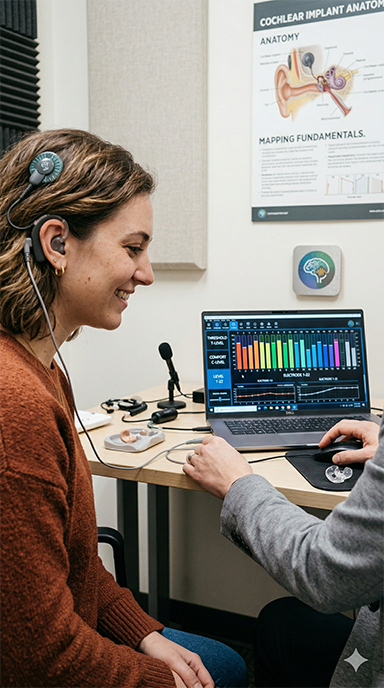
During a mapping session, your audiologist connects the sound processor to a computer. This allows them to make precise adjustments to the electrical signals sent to the electrodes in your cochlea. You will listen to a series of beeps and provide feedback on what you hear.
The audiologist focuses on several key settings to build your custom map. The main elements they adjust are:
- T-Levels (Thresholds): These are the softest sounds you can detect for each electrode. Setting these correctly ensures you can hear quiet speech and environmental noises.
- C-Levels (Comfort Levels): Also known as M-Levels, this is the volume that is loud but still comfortable for you. This prevents sounds from being jarring or too intense.
- Programming Strategy: This is the algorithm the device uses to translate sound into electrical stimulation.
Based on your responses, the audiologist creates a program that is uniquely tailored to your hearing perception. This detailed process ensures that the vast range of sounds you encounter daily is processed effectively.
The Role of Mapping in Everyday Listening Clarity
Why is consistent mapping so important? Your brain needs time to adapt to hearing through a cochlear implant. The electrical signals it provides are different from natural hearing, and regular adjustments help make this new way of hearing clearer and more natural over time.
Periodic mapping appointments play a huge role in how beneficial your implant is. As you get used to the device, your perception of sound changes. An updated map can improve your speech perception, making it easier to follow conversations in both quiet and noisy environments. This directly enhances your ability to engage in everyday listening situations, from talking on the phone to enjoying music.
Ultimately, mapping is not a one-time setup. It is an ongoing process of refinement that ensures your cochlear implant continues to meet your needs as your brain learns to interpret the new electrical signals, leading to better hearing and an improved quality of life.
The Cochlear Implant Mapping Process
The cochlear implant mapping process is a collaborative effort between you and your audiologist. These appointments are where your speech processor is programmed to deliver the best sound quality for your unique hearing profile. This helps improve the overall performance of the cochlear implant by ensuring the settings are optimized.
During these sessions, your audiologist will use specialized software to adjust how the implant processes sound. The goal is to make speech easier to understand and everyday sounds more distinct. Let’s walk through what happens in a typical appointment and how the settings are customized for you.
What Happens During a Mapping Appointment?
When you arrive for a mapping appointment, the first step is for the audiologist to connect your sound processor to a computer. As a CI user, your role is to provide feedback on a series of beeps you’ll hear. This helps the audiologist determine the softest sounds you can hear (T-levels) and the most comfortable loud sounds (C-levels) for each electrode.
After initial adjustments are made, your audiologist may conduct speech perception testing. This helps verify how well the new settings are working for understanding words and sentences. It’s a practical test to see if the changes have improved clarity. To make the most of your appointment, it’s helpful to:
- Arrive well-rested.
- Bring all of your implant accessories.
- Have notes about your hearing experiences since the last visit.
- Write down any questions you have.
This preparation allows your audiologist to address any specific challenges you’re facing and create a map that truly works for your lifestyle.
Common Techniques and Customisation for Individual Needs
Cochlear implant mapping isn’t a one-size-fits-all process. Audiologists use various techniques and strategies to ensure the customisation meets your specific needs. The type of hearing you had before and your personal sound preferences influence the programming of your speech processor.
Beyond setting T- and C-levels, your audiologist can adjust the stimulation rate and choose different programming strategies. These are complex computer algorithms that change how acoustic sound is converted into electrical stimulation. Some strategies might prioritize speech clarity in noise, while others may offer a richer, fuller sound quality. This level of personalization is key to a successful outcome.
The table below shows how different mapping settings can be tailored to individual needs.
| Setting | Purpose | Customization Example |
|---|---|---|
| T-Levels (Thresholds) | Defines the softest sound the user can detect. | Adjusted for each electrode to ensure quiet speech is audible without being too faint. |
| C-Levels (Comfort) | Sets the upper limit for comfortable volume. | Fine-tuned to prevent sounds from becoming distorted or uncomfortably loud. |
| Programming Strategy | The algorithm converting sound to electrical pulses. | Selected based on whether the user prioritizes understanding speech in noise or music quality. |
How often should cochlear implant mapping be done?
Initially, a new CI user will have frequent mapping appointments in the first few months after the speech processor is activated. After this initial period, appointments are typically scheduled annually. However, your audiologist may recommend more frequent visits if your hearing needs change or you experience issues with your hearing.
Who performs cochlear implant mapping and what qualifications do they hold?
Cochlear implant mapping is performed by a licensed audiologist who has specialized training in cochlear implants. These professionals hold a master’s or doctoral degree in audiology and have extensive experience in programming these complex devices. They understand both the technical aspects of the speech processor and the nuances of hearing perception.
Are there challenges during mapping, and how are they addressed?
Yes, challenges can arise during mapping, especially with young children or a CI user who has difficulty providing feedback. Audiologists address these by using objective measurements and observing behavioral responses to sound. For any user, gradual adjustments and open communication are key to overcoming difficulties and improving speech perception over time.