Concerned about your child’s hearing? Learn when should a child get their first hearing test? Discover essential insights to catch issues early in our blog.
A hearing test is a key first step to check your child’s hearing and speech. Doing a hearing screen early on lets you see if there are any problems and helps you act fast. This step can stop any long-term problems in your child’s development. If you get your child’s hearing test done in the first weeks of life, it helps your baby learn how to talk and listen the right way. If you do not know when to give your child their first hearing check, this article will share all the facts you need to know.
What is the importance of hearing in early childhood?
Hearing is very important for a child’s speech, thinking, and way of connecting with people. From the time babies are born, they use their hearing to know voices, hear sounds, and start using words. The sounds they hear early in life help them learn to speak, learn new things, and get along with other people.
In Australia, all newborn babies get universal newborn hearing screening (UNHS) before they leave the hospital. This helps find hearing problems early, so the baby can get the right care.
Key milestones in hearing and speech
Children grow and change in how they hear and speak as they get older. These changes are linked to their age. A hearing screening helps you know if your child is growing the way they should in hearing and speech. Babies who are newborns up to three months often react to loud noise. You might see them get startled, calm down, or change when they hear a voice they know.
At three to six months, babies begin to turn their heads toward sounds. They do more listening at this time. This helps them build language skills. Good listening is important for your baby to get normal speech as they grow.
Between six and twelve months, babies start to copy the sounds people say. They might also do simple things if you tell them, like waving for “bye-bye.” This shows the baby’s hearing is working well. If you watch for these things, you and other parents can spot if there is a problem with listening or speech early. Then, you can make sure the child’s needs get the right care.
How hearing impacts learning and social skills
Hearing loss can change the way a child talks with others and how they do at school. A lot of people do not know that a child’s hearing can also affect how they feel about learning and their skills. If a child’s hearing is not good, it is hard for them to pick up language. This makes it tough to do well in class and when they are with friends.
A child’s hearing is very important. It lets them listen and learn new things. When kids are in a lesson or talk to other children, their hearing helps them join in. This is how they grow and learn. Early language development at this stage gives children the confidence to take part in all talks.
There is more to this. Hearing problems can make kids feel left out or alone. This can make it hard for them to make friends and feel strong on their own. If we find communication skills problems early on, we can take the right steps. This helps children with language development, listening, and having a good social life. They can then grow up with the skills they need for life.
Why Early Hearing Tests Matter
You need to check your child’s hearing early. This is a very important thing to do. A quick hearing test will help you know if there is a hearing problem. It is good to find this out soon, so it does not hurt your child’s language development or speech.
If you find out about hearing loss early, you can help your child better. Parents and experts can take action fast. They can use hearing aids or other support for the child. Doing these things helps reduce the effect of a hearing problem on language skills and future learning. When you act early, your child’s growth, speech, and communication can be good from the very beginning.
What happens if hearing loss goes undetected?
Not knowing about hearing loss can slow down how a person learns to talk or understand others.
Risks include:
- Speech delays
- Poor classroom performance
- Limited social interaction
- Behavioral issues from frustration
| Risk Factor | Impact |
|---|---|
| Prematurity | Increases likelihood of auditory system immaturity |
| Family history of hearing loss | Suggests genetic predisposition |
| Infections (e.g., CMV) | Can damage hearing during or after pregnancy |
Early detection helps to stop bigger problems with talking and learning later on.
The benefits of early intervention
Taking action early is the best chance for children who have hearing loss. When you use early intervention, such as hearing aids or cochlear implants, kids can notice more sounds. This support helps them learn normal speech and use language better.
Focusing on your child’s needs in the first few months is very important. This gives a good start for auditory training and helps your child’s thinking skills grow. Early intervention can lower the strain that hearing loss puts on communication skills. It also lets a child take part in social and school life with more ease.
Adding assistive devices can give a lot of help. A cochlear implant is one example that can make things much better for kids who have strong hearing loss. These devices let them take part in daily life, so their learning and friendships do not stop.
Recommended Ages for Children’s Hearing Tests
Hearing screening for newborn babies takes place in the first few weeks of life. This test is most often done before you and your newborn leave the hospital or birthing center.
It is good to have follow-up hearing checks over the years of life. You should talk to your child’s doctor during regular checkups. This way, you will know the hearing evaluation schedule for your child. Regular tests from just months of age through later years help find problems early. This support is needed for your child’s language development as they grow.
Newborn hearing screening: What to expect
Newborn hearing screening is a way to make sure that the main hearing pathways in your baby’s ears work the right way. This check happens in the hours or days right after a newborn is born. Your newborn goes through this hearing screening with the help of special tools like the Natus Algo3i®. Soft clicking sounds get played into the baby’s ears with small earphones. At the same time, small electrodes are put on the neck, shoulder, and forehead. These electrodes help record how the body reacts when these sounds are played.
You get the results from this hearing screening right away. Your baby will either “pass” or get a “refer.” A “pass” means your baby’s hearing is good for early speech growth. If it is a “refer,” your baby will need to have a second screen.
| Screen Result | Meaning |
|---|---|
| Pass | Hearing is enough for speech to develop |
| Refer | Needs another check to confirm hearing levels |
If your newborn gets another “refer” result on the second screen, you will need to get a diagnostic audiology assessment. This test finds the hearing problem and shows what your baby may need. It helps learn more about your newborn and the best next step for them.
Ongoing hearing checks during early childhood
After the newborn stage, you need to keep checking your child’s hearing in the early years of life. These checks are not the same as newborn hearing screens. You will often take your child to an outpatient appointment for the hearing check. The results from this visit will go in their personal health record.
Your child’s doctor or hearing specialist will let you know when your child needs these hearing tests. They often say to do these checks during big moments, like in the first few months or at certain years of life. This way, people can see if there is anything that might hurt language development. If there are any risk factors, the doctor can find them early.
A newborn may pass the first hearing tests but can still have hearing loss later. Things like infections in the ear canal or being around loud noise are risk factors. This is why the hearing of your child needs to be checked as they grow. If specialists find any problems early, they can help your child before there are big problems with talking and understanding others.
Signs Your Child May Need a Hearing Test Sooner
Do you notice that your child does not react to loud noise, or it seems like they have a hearing problem? If you see this, it may be a good idea to get a hearing test earlier than you planned.
Talk to your child’s doctor right away if you notice anything that worries you. Early detection of a hearing problem is important because it can slow down your child’s language development. If you see these signs early and act quickly, you can help protect your child’s language skills. This will also help them do well with learning and talking to people.
Common symptoms of hearing loss in babies and toddlers
Babies and toddlers with hearing loss may act in many ways. Watch for these signs:
- The child does not react to a loud noise at most weeks of age.
- They may have trouble hearing soft sounds or speech.
- The eardrum might not move as it should when doctors check it.
- The child may act in a strange way when you talk to them.
- It can take them longer than other kids to copy speech sounds after some months of age.
Parents should watch for any signs of trouble with their baby’s hearing. If you see something early, it can save time and help your baby get the support they need. This early help can stop bigger problems. It can also help your child learn better and faster. Looking out for your baby’s hearing is so important for their future.
Behavioural and speech indicators parents should watch for
Parents need to look out for signs that show slow language development. If your child does not pay much attention to the TV or to people who talk, this could be a concern. Also, if they do not take part in simple communication skills with you or others, it may be something to think about.
Watch out for these signs:
- The child finds it hard to listen, even when the room is quiet.
- Their speech does not get better as they grow older.
- It takes them longer to know the voices of family or easy words like “no.”
- The child plays less with other kids and does not join in, which can slow down their social skills.
Watching for these signs and bringing your child in for a hearing test can help with early care. This is key for your child’s language development, listening, and healthy growth.
How is a child’s hearing tested in Australia?
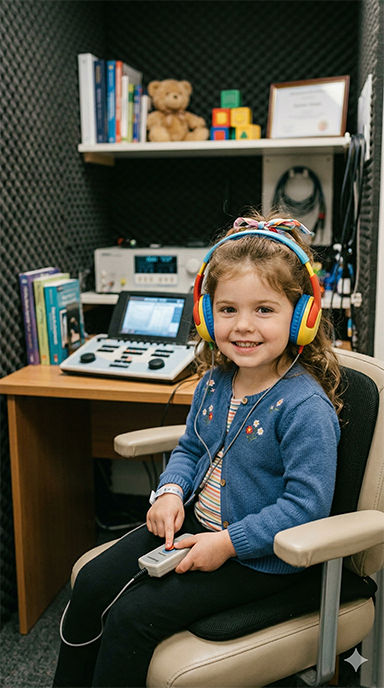
Children’s hearing can be checked in two main ways, OAE and ABR. The OAE test has a small probe that goes in the ear and measures how the ear reacts to sound. The ABR test checks how the auditory nerve works by putting small electrodes on the child. An audiologist does the hearing evaluation. The audiologist will look at your child’s needs and use the best tools and ways for them. This helps to make sure the child’s hearing gets tested the right way.
What should I do if my child doesn’t pass the hearing test?
If your child gets a “refer” result, you need to book a diagnostic audiology assessment as soon as you can. This test gives a closer look at your child’s hearing. Your GP or ENT will help you know what the results mean and tell you what to do next. It is good to act fast so that any problems with your child’s hearing can be managed early.
Are hearing tests safe for babies and young children?
Hearing tests for newborn babies are safe. The ABR test uses soft electrodes that stay on the skin and do not go inside the body. The OAE test uses gentle probes for checking the ears of your newborn. Both of these tests are usually done as outpatient visits. Your baby will not feel pain at any time when these tests are done. The people who give these tests to newborn babies are trained and know what babies need.
Can hearing loss affect my child’s speech and school performance?
Yes, hearing loss can make it hard for kids to build good language skills. It can be tough for them to talk with other people. This might also hurt their work at school. Using amplification, like hearing aids or cochlear implants, can help a lot. These tools can help with their speech and language skills. With the right help, they can join in at school and in other group activities.
How often should my child have their hearing checked?
Children should get a hearing screening at important times. The first one needs to be in the first months of life. There should also be more checks in the years of life as they grow. You can talk to your child’s doctor to make these tests happen. The screenings should fit your child’s needs and your personal health record.