Discover “What Is Pure-Tone Audiometry” and its importance for hearing health. Learn how it’s performed and what the results mean in our latest blog post.
What does pure-tone audiometry measure?
Pure-tone audiometry measures the quietest sounds a person can hear across specific sound frequencies, typically from 250 Hz to 8000 Hz. This hearing test produces an audiogram, which charts hearing thresholds in decibels. It helps detect sensorineural, conductive, or mixed hearing loss.
| Frequency Range | Hearing Level (dB) | Interpretation |
|---|---|---|
| 250–8000 Hz | 0–25 dB | Normal |
| 26–40 dB | Mild loss | Difficulty with soft sounds |
| 41–70 dB | Moderate loss | Trouble with conversations |
| 71–90 dB | Severe loss | Only loud sounds heard |
| 91+ dB | Profound loss | Very limited hearing |
How is the test done?
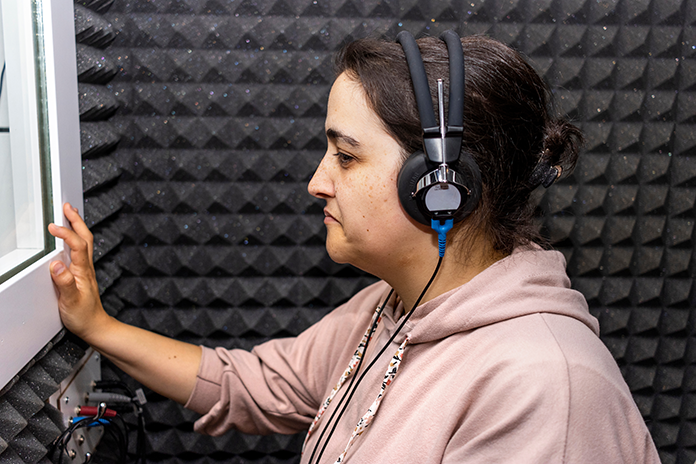
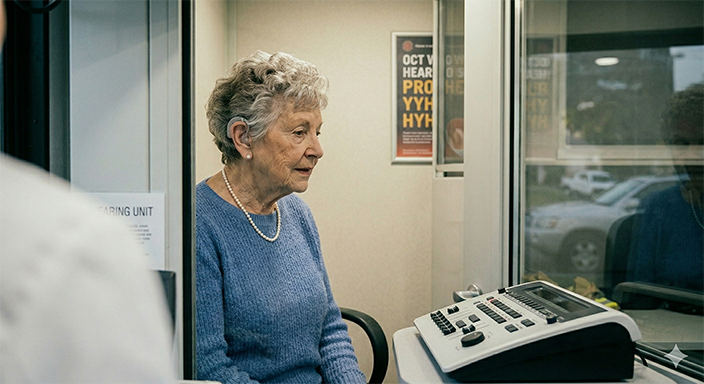
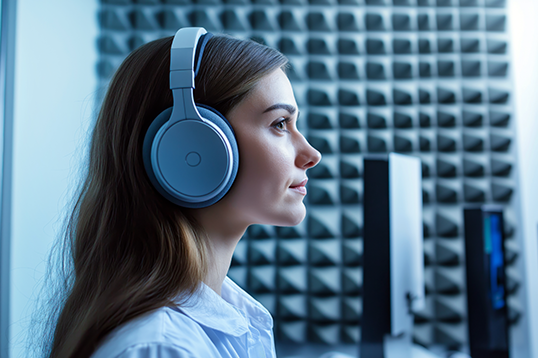
The test is conducted in a soundproof booth using a calibrated audiometer. The patient wears headphones or bone vibrators while a trained audiologist plays tones at different frequencies and decibel levels. Patients press a button or raise a hand when they hear each tone. This process determines pure-tone thresholds for each ear.
What is air conduction testing?
Air conduction testing evaluates the entire auditory pathway—from the outer ear to the cochlea. It’s conducted using headphones to transmit tones through the air.
What is bone conduction testing?
Bone conduction bypasses the outer and middle ear by sending vibrations directly to the cochlea via a bone oscillator placed behind the ear. This isolates inner ear function and helps identify the type of hearing loss.
Why is pure-tone audiometry important?
It provides objective, numerical results essential for diagnosis.
Audiometry is used for:
- Hearing impairment detection in routine checkups
- Baseline hearing tests in noisy workplaces
- Audiology exams for ongoing hearing evaluation
Where is this test used?
Pure-tone tests are standard in ENT clinics, hearing centers, and occupational health screenings. They are also used to track hearing changes over time, especially in patients exposed to loud environments or with known ear disorders.
What are normal and abnormal results?
Normal hearing falls between 0–25 dB across all test frequencies.
Deviations beyond this range suggest potential hearing loss:
- Conductive hearing loss: normal bone conduction, abnormal air conduction
- Sensorineural hearing loss: similar loss in both air and bone conduction
- Mixed hearing loss: combination of both pathways affected
How does it compare to speech audiometry?
Pure-tone audiometry measures hearing sensitivity across frequencies, while speech audiometry evaluates how well speech is understood. Both tests are complementary, providing a full picture of auditory function.
When should you get tested?
You should get a pure-tone audiometry test if you notice changes in hearing, work in loud environments, or are over age 50. Early detection of hearing issues improves treatment outcomes and prevents further damage.
Common reasons to get tested include:
Medical history of ear infections or ototoxic medication use.
Difficulty understanding speech in noisy settings.
Frequent need to increase volume on devices.
Exposure to occupational noise over 85 dB (e.g., construction, manufacturing).
Routine hearing screening for children or older adults.
Monitoring existing hearing loss or ear-related conditions.