Discover the pros and cons of Manual vs Automatic hearing aid adjustments. Find out how auto settings can save you time and enhance your listening experience.
Adjusting a hearing aid the right way is important for the people who have hearing loss. The way you use it can mean you feel lost or enjoy clear sound. There are two main ways to set up a hearing aid. You can make manual adjustments, which means you use your hand to change the hearing aid settings. Or, you can pick automatic options, where the hearing aid will change its settings by itself. It helps to know which option will work for you in your day-to-day life. Some places have a lot of background noise while others are quiet and just have normal talk. When you understand what you need, you will get more from your hearing aid and make your hearing feel close to natural.
Key Differences Between Manual and Automatic Hearing Aid Adjustments
The difference between manual and automatic hearing aid adjustments is about who has control. When you use manual adjustments, you turn dials, press buttons, or use a remote control to pick the volume and settings you want. This lets you have full control of the sound levels and your hearing aid. On the other hand, automatic settings use sensors in the hearing aid to notice what is happening around you. The hearing aid will then change the sound levels by itself, so you do not have to do it.
User experience can be different with each type. If you make changes by hand, you can get real-time personalization, but it might need you to put in effort often, especially if things around you change a lot. On the other hand, automatic settings give you a smooth and easy way to use the hearing aid. This is good for people who do not want to deal with controls and who want their hearing aid to adjust on its own right away.
How manual adjustments work: user control and customization
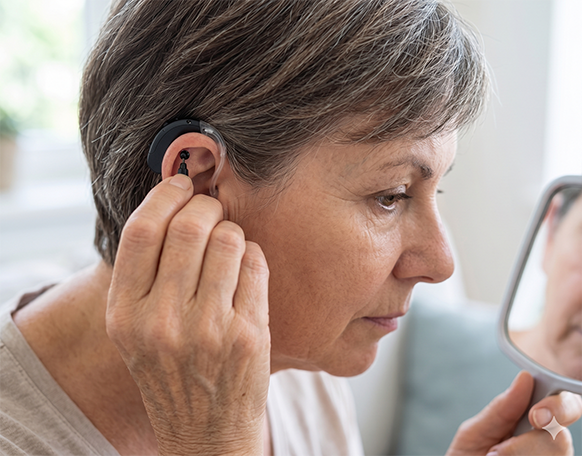
When you use manual adjustments, you work with your hearing aid right away. You do this by using tactile switches, dials, or small levers. Some hearing aids have push buttons or toggle keys. It is easy to change the volume or switch between set programs by using just one finger. You feel and hear a “beep” each time you make a change. This helps you know what you did and confirms every action at that time.
This hands-on method lets you change your hearing aid settings for different places. For example, you can lower the volume at a loud event. You can also make it louder when you watch TV in a quiet room. If you like to have direct control over your hearing aid or want to try out different sound levels, manual control is a good choice. It gives you more ways to use your hearing aid just how you like it.
For people who are good with tech or have special hearing needs, these manual features can be very useful. You can set each device on its own or both at the same time. This way, both your ears get just the right amplification. Some people like having this much control, but it can feel like too much work when sounds change fast. That’s a big reason why some lives are better with automatic choices.
How automatic settings work: smart programs and sensors
Automatic settings in new hearing aids use smart sensors to check your surroundings and change sound levels for you. You do not have to do anything. These hearing aids have systems, like Phonak AutoSense, that watch for changes all the time. They pick up on background noise, people talking, and other sounds. The sensors work to give you the best sound levels in any place.
Smart programs in a hearing aid can change on their own as you move between different places. You do not have to push a button. For example, if you are in a quiet home, the hearing aid may boost soft voices with extra amplification. If you go out to a busy street with lots of noise, it will turn down loud sounds in real time.
The biggest advantage of using automatic settings is that you get a “hands-off” experience. This means you do not have to keep making changes yourself all the time. It will save you time. The sound quality stays the same, even when you move to different places. This is very good for people who have trouble using physical controls or just want an easy way to get hearing support.
Pros and Cons of Manual Hearing Aid Controls
Manual controls on your hearing aid let you change the volume and switch programs any time you want. It is good for those times when you are in a busy place or when the background noise is too much, and you need better sound quality right away. But, when you use manual control, you have to check and fix the settings a lot yourself. For some people, this can be a bit of trouble in their day.
The next parts show the good and bad sides of manual adjustments. This will help you see if they are right for you. You can also find out if using automation will make your daily listening better and easier.
Advantages of hands-on tweaks in specific situations
Manual adjustments in a hearing aid give people more flexibility and control over their listening. There are times when these hands-on changes help the most.
- Fine-tuning the sound levels can help when there are sudden or random noises, like at a live music show or in a busy market.
- You can make changes to the sound levels for what you like, for example when you watch TV or talk with someone.
- You might need to handle your own hearing if a program does not change fast enough, like when the loudness goes up quickly during a family get-together.
These situations show why people like having manual volume control. With it, you can set the sound levels just the way you want. When the sound goes up or down, you can react right away. This way, you will not feel left out, and the sound will not be too much for you.
Tech-savvy users and people who want a more personal amplification feel often like to use manual adjustments. They feel good about the direct feedback and the control they get. This can help a lot when you are in new or hard listening places where the normal settings do not work well. For them, being able to make their own manual adjustments gives more satisfaction and works better.
Drawbacks: Time, inconvenience, and user errors
The problems with making manual adjustments can add up fast, especially for some hearing aid users. The main downsides are:
- It takes a lot of time, especially if you need to keep changing the settings in new places.
- There is a bigger chance of making mistakes, like setting the volume too high or too low by accident.
- Some people find it hard to use small levers, switches, or dials. This is more true for older adults or those who have trouble moving their hands well.
Frequent changes can get pretty annoying. It can take your mind off talking with people or doing what you need to do. For some people, this hassle is not worth the good things that come from perfect customization.
There is a risk that you might get poor sound quality if you set up your hearing aid in a hurry or make mistakes. If the volume levels are not set right, it can be hard to hear people clearly. This can make it tough to follow a talk and your hearing aid might not work as well for you.
Benefits and Limitations of Automatic Hearing Aid Settings
Automatic settings are common in many newer hearing aids. These let the hearing aid change to different sound levels and background noise by itself. You do not have to do anything for this to work. This makes things easy. This tech is very helpful for people who like more convenience. It is also good for people who find it hard to use the manual controls.
Still, every system can have some things go wrong. A hearing aid is not perfect. Sometimes, sensors can get mixed up by different places or certain noises. This can lead to results that are not so good. In the next parts, we will talk about the good things and the trouble that can happen if you only use an automatic hearing aid program.
Seamless adaptation to different environments
Automatic settings work well because they can adjust to many different listening places without you needing to do anything. Some of the main benefits are:
- The hearing aid helps you switch between quiet places, busy roads, and loud groups easily. Its sensors change the amplification in real time.
- Hearing aid users will get the same sound quality, even if the background noise changes suddenly.
- You will not have to adjust the device as much. This way, you can focus on your talk or other things, not on the hearing aid.
Imagine you walk out from your quiet home and go to a busy park. The hearing aid lowers the sound of the wind and helps you hear people talk better. When you walk into a crowded restaurant, the hearing aid changes again. It makes the background noise softer and helps you hear the people talking at your table.
This hands-free way helps to cut down on the trouble of always making changes. Because of this, people feel more at ease and not as tired when listening every day. This is especially true for those who often go from one type of sound to another during the day.
When auto mode isn’t enough and manual override is needed
Even though automatic settings work well most of the time, they can still have trouble in some situations. The settings might not do a good job when there are odd or rare sounds. For example, quick loud noises or times when many voices and background sounds mix together may be hard for the system to handle.
In these situations, it is important to have a manual override. For example, if you use a hearing aid and you are in a quiet place, new sounds can pop up without warning. Sometimes, the automatic setting in a hearing aid does not react fast enough. It may not know what sounds to make louder or softer. In cases like this, a manual override can help you get the best hearing experience.
Users need to know how to switch between the different modes or use custom profiles. When you notice a problem with sound quality or feel any discomfort, try switching to manual control for a short time. This can help bring back clear sound until things around you feel stable again. As Dr. Cliff Olson, who is an audiologist, says, “No technology is perfect, and sometimes your ear knows best.”
Integration of Manual and Automatic Modes in Modern Hearing Aids
Modern hearing aids usually mix manual controls with automatic settings. With these, you get the best of both worlds. You can let the smart sensors deal with the usual changes on their own. But, if you want more say or run into a different problem, you can step in and adjust things by hand.
The next parts show how you can easily move between programs on your hearing aid. They also talk about how custom profiles work with automatic settings. This helps your hearing aid be as quick to react or as hands-off as you want.
Switching between programs: How easy is it for users?
Switching between manual and automatic programs on a hearing aid is now much easier. Most hearing aids let you do this in several ways. You can use a push button on the hearing aid, change settings with an app on your phone, or let the sensors in the hearing aid make the switch for you automatically.
To show how different brands and models can be used, look at the table below.
| Brand/Model | Manual Toggle (On-device) | App-based Control | Auto-Switching Sensors | Accessibility for Older Users |
|---|---|---|---|---|
| Phonak Marvel | Yes (push button) | Yes | Yes | Easy, large button |
| Oticon More | Yes (push button) | Yes | Yes | Moderate, app favored |
| Widex MOMENT | Yes (toggle key) | Yes | Yes | Easy, tactile toggle |
| Signia Pure Charge&Go | Yes (rocker switch) | Yes | Yes | Good, but smaller switches |
This setup gives people a lot of ways to get to their favorite settings fast. You can use simple switches on the device or go into an app. The app is good for people who find it hard to use small buttons with their hands. Others may like to push a button for quick changes. This makes sure everyone can use what works best for them.
Custom profiles and their interaction with auto adjustments
Custom profiles make it much easier for hearing aids to adjust on their own. These are made to fit what each person needs. So, the device can quickly change in different sound places. It could be a busy café or a quiet home. Because sensors and user settings work together, automatic volume control helps get the right level of amplification. This keeps sound quality good. When people use these custom profiles, they move through specific situations without trouble. This means they do not have to make a lot of manual adjustments. It also lets them feel better about how their hearing aids work every day.
Who Should Choose Manual vs Automatic Adjustments?
Choosing between manual and automatic changes depends on your lifestyle and the type of hearing loss you have. It’s also about how much control you want. Some people like to be able to change every setting on their hearing aid. Others want it to just work well during the day without having to think about it. Both ways help people with hearing loss find what works best for them.
The next parts will give helpful tips for how hearing aid features can fit with different ways people live. You will get ideas that are important for people in Australia. This includes what to think about when it comes to climate, support, and how common tinnitus is.
Best options for various lifestyles and listening environments
The right hearing aid for you depends on how, where, and when you use it. Here are some tips to help you with hearing aid adjustment:
- Busy professionals or people who spend a lot of time with others can benefit from automatic settings. These settings help manage changes between quiet and loud places. You do not have to pay attention all the time, as they do it for you.
- People who spend most of their time in the same place, like those who stay at home or are retired, may like having manual controls. You get to choose the sound levels you want. This is good if you have strong likes when it comes to how loud something should be.
- People who deal with changing or very loud sounds, such as musicians, teachers, or anyone working in busy places, might like a mix. A hybrid way lets you use both your own saved profiles and quick manual changes. This helps you get the sound levels you need when things change fast.
There is not one answer that works for everyone. Many people like to have both choices. This way, they can change things up if their day or the way they listen to music shifts. Being able to pick makes it better for their needs.
Key considerations for Australian users
Australians have their own set of problems when it comes to hearing care. The harsh weather here makes things harder. A hearing aid used in this place has to stand up to high heat, lots of dust, and wet air. These things can get in the way of both manual and automatic hearing aids working well.
Access to a hearing care provider is very important, especially for people living in rural Australia. It is good to have regular hearing tests and get help when you need it. This makes sure your hearing device, either manual, automatic, or a mix of both, stays working the way it should. There are Australian government programs that help pay for hearing aids and services. They support seniors, pensioners, and people who have disabilities, so they can get the hearing care they need.
Tinnitus is also common, and many hearing aids have special programs to help with it. In Australia, people should talk with their audiologist about their hearing loss and other needs. By working together, they can pick the right device and settings. This will help get the best results in any place.
Can I switch between manual and automatic hearing aid settings anytime?
Yes, most modern hearing aids give you both manual adjustments and automatic settings. You can switch between these anytime. You just have to use a push button, a toggle key, or an app. This way, you can change your hearing aid settings right when you need. The hearing aid lets you get the best sound for where you are and what you need.
Are there any common issues with automatic sound adjustments?
Common problems with automatic settings can be when sensors read loud noises the wrong way. Sometimes, they do not keep up in busy places. This can cause the sound quality to not be as good as you want. A good way to fix this is to get regular updates and fine-tuning from your audiologist. Every now and then, you may need to make some manual changes to help make things better.
Do all hearing aids offer both manual and automatic adjustment options?
Not every hearing aid has manual and automatic adjustment options. When you look for a hearing aid, check if it has program toggle buttons and volume controls. You can ask your audiologist about the models that include both of these features. This helps you get the flexibility that you need.